






Table of Contents
Quick Summary
- Swimming pools enhance both aesthetic appeal and property value
- Gunite pools are among the most popular choices due to durability and design flexibility
- Made from a sprayed mixture of cement, sand, and water, forming a strong structure
- Construction includes excavation, rebar framework, gunite spraying, and finishing
- Finishing options include plaster, pebbles, tiles, or a combination
- Gunite pools allow custom shapes, sizes, and added features like spas and waterfalls
- They require regular maintenance due to their porous surface
- Algae prevention involves brushing, filtration, and chemical balance
- Cracks may occur but are repairable through resurfacing or replastering
- Though costly and time-consuming, gunite pools offer long-term value and longevity
Swimming pools are an aesthetic and functional addition to any property. In addition to offering a refreshing escape during warm weather, they enhance a home’s beauty and can significantly increase property value. Constructing the ideal pool for your home requires thorough research and the right professional expertise.
Among the various types of swimming pools available today, gunite pools are one of the most sought-after choices. They are popular for their durability and versatility.
Before starting a gunite pool construction project, several important factors must be considered, including the building process, maintenance requirements, and overall costs. Seeking professional assistance is always recommended to ensure the best results.
A reputable gunite pool construction company like EverClear Pools & Spas can guide you through the process and help bring your dream pool to life.
In this article, we will explore every aspect of a gunite swimming pool, including:
- What is A gunite pool?
- Gunite pool construction process
- Cleaning and preventing algae growth in the gunite Swimming pool
- How to increase or reduce alkalinity in a pool
- What are the pros and cons of gunite pools?
So, let’s dive into the details of gunite swimming pools!
What Is A Gunite Pool?
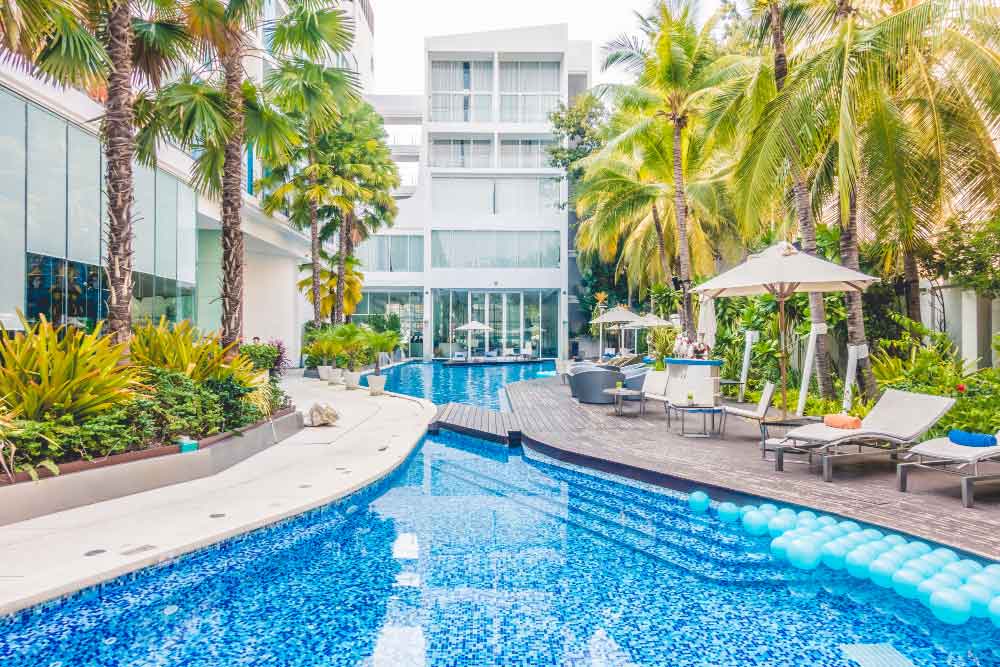
Gunite is a type of concrete swimming pool constructed using a mixture of sand, cement, and water. The mixture is then sprayed onto a framework using a high-pressure hose. Unlike traditional poured concrete pools, the gunite mixture is applied in layers over a steel reinforcement structure. The spraying process allows the material to bond tightly and form a strong, durable shell, giving gunite pools their durability, flexibility, and ability to withstand varying soil conditions.
Gunite Pool Construction Process
There are three basic steps in the construction of gunite pools.
1. Digging Hole
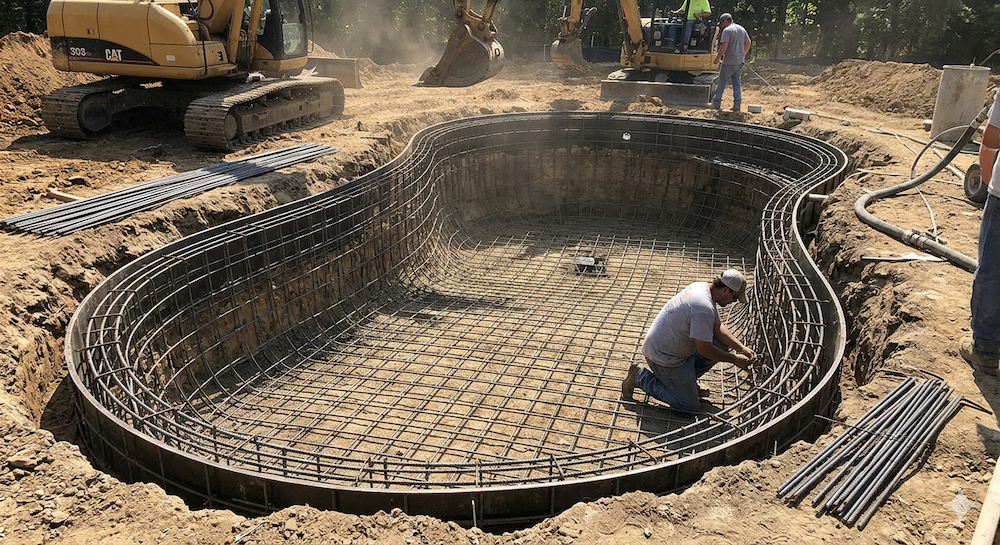
AI-generated concept visual
Constructing a gunite pool begins with excavation. The ground is dug according to the planned pool shape and depth. Then, steel reinforcement bars or rebar are installed to create a structural framework. The rebar grid forms the skeleton of the pool, providing structural support and preventing cracks.
2. Spraying Cement
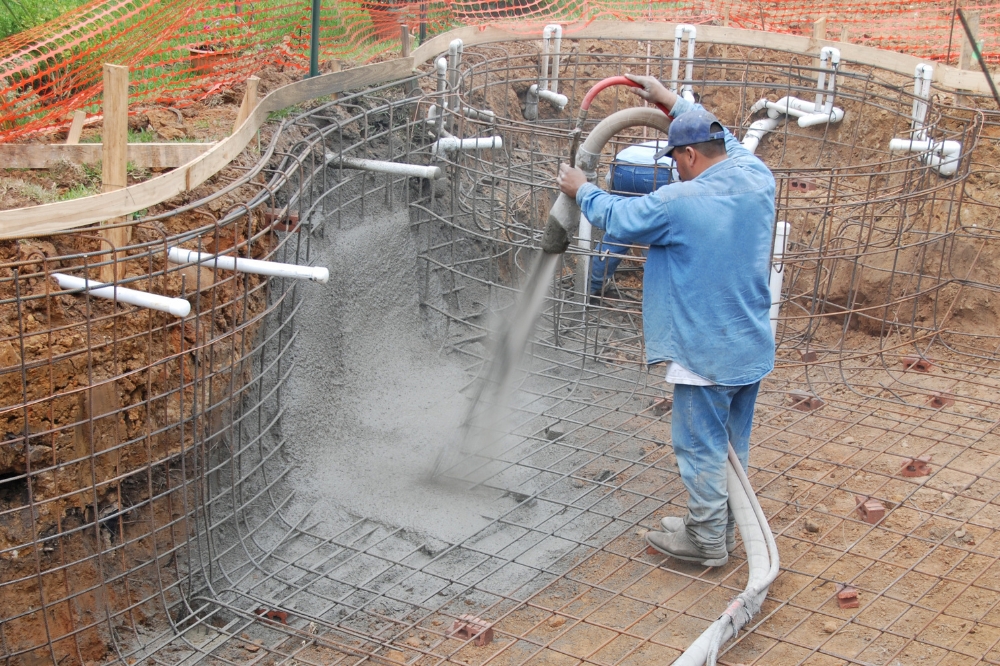
Once the skeleton is ready, the gunite mixture is sprayed onto the rebar structure using specialised equipment. The mixture is applied under such high pressure that it adheres firmly to the structure. When the surface is still workable, it is shaped and smoothed. The pool shell is then left to cure and strengthen.
3. Finishing And Plastering
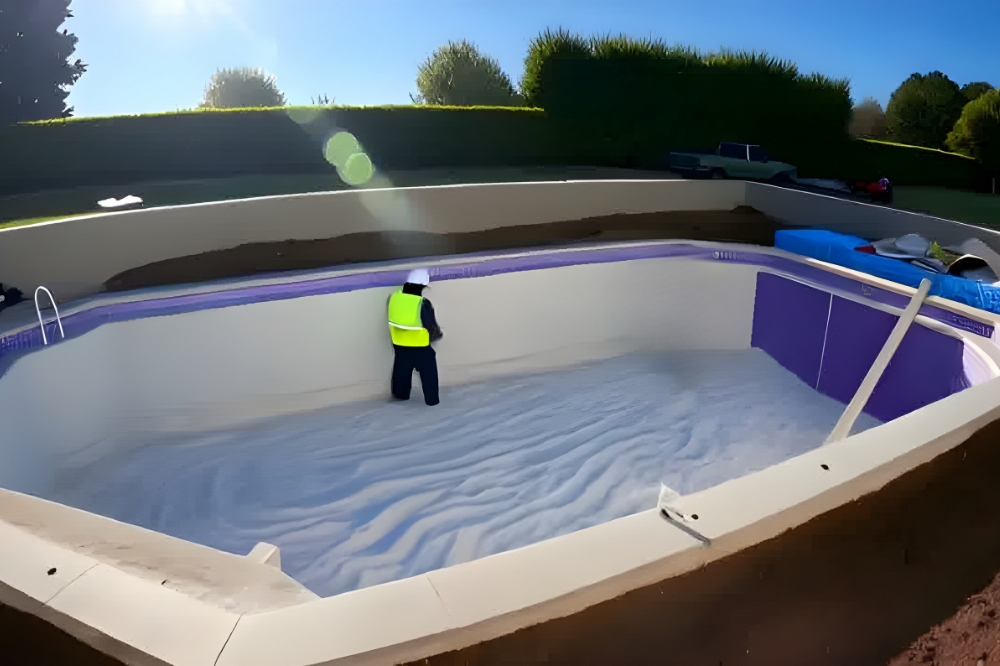
After the shell has cured, the finishing process begins. This stage determines the appearance and texture of the pool. Some opt for plaster, some go for pebble finishes, and some choose ceramic or glass tiles. Each material offers a unique look and texture. Many homeowners combine multiple finishes to create something distinct.
4. Filling the Pool with Water
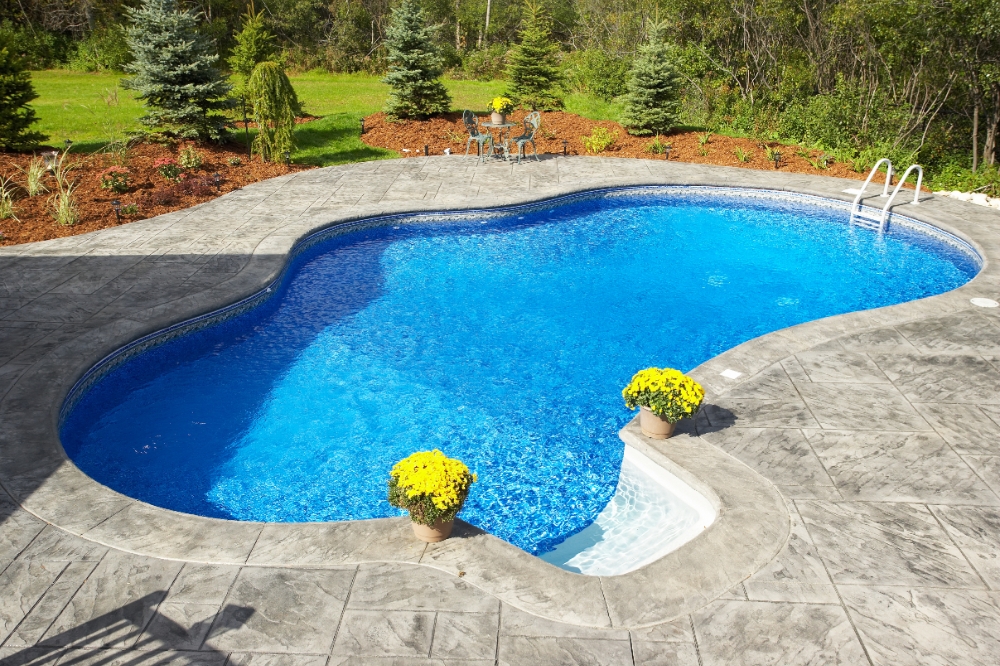
The final step of the construction process is filling the pool with water. Chlorinated water is used initially to ensure proper sanitation. Ensure the filters, pumps and circulation systems are functioning efficiently.
Maintenance and Repairs
Gunite pools are a long-term investment and have a longer lifespan compared to their counterparts. However, they require regular maintenance and repairs.
Mending Cracks
Gunite swimming pools are prone to cracks. Repairing these cracks involves draining the pool, cleaning the surface, applying bonding chemicals, installing reinforcement staples, and replastering the repaired area. Timely repairs help prevent further structural damage.
Resurfacing
If the cracks are not deep, then opt for resurfacing. This involves applying a new layer of plaster or finish to the pool interior. Resurfacing not only repairs minor damages but also refreshes the pool’s appearance.
Apart for this we have a complete swimming pool maintenance guide for you to refer.
Cleaning and Preventing Algae Growth in the Gunite Swimming Pool
Gunite pools have a porous surface, making them susceptible to algae growth. Using chemicals like algaecides can prevent its growth. Frequent brushing, vacuuming, and filtering can also help balance the chemistry of your pool. Testing pool water regularly maintains the overall wellness of your pool.
Maintaining balanced alkalinity is essential for healthy pool water. If alkalinity is high, the water may appear cloudy. If it is low, the water may become corrosive.
You may maintain proper alkalinity by:
- Adding baking soda to increase alkalinity
- Using muriatic acid to reduce alkalinity
- Use a pool test kit to test pool water.
If you want to know more about how to clean and maintain your swimming pool have a look at our article A Guideline to Maintain and Clean Your Swimming Pool
What are the Pros and Cons of Gunite Pools?
Here are some pros and cons of gunite pools, it will help you to clear all the doubt about gunite swimming pools.
Pros of Gunite Pools
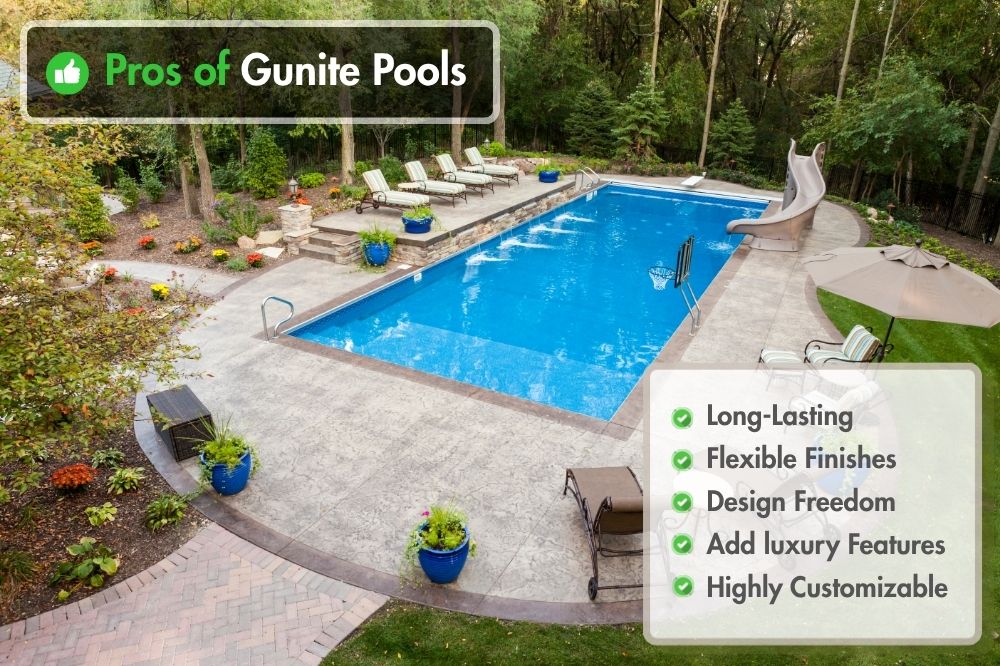
Let’s take a look at the pros of gunite pools.
- The versatility and customizable nature of gunite swimming pools give them an upper hand. You can get them in any shape, size, and form of your choice. A best pool builder can help you brainstorm ideas and design a pool that perfectly complements your backyard and lifestyle. They can also ensure your dream pool adheres to safety regulations and building codes.
- Longevity is another characteristic quality of gunite pools. They can last for several years, even decades, without resurfacing and repairs. However, you need to keep them clean and properly maintained to maximise their durability.
- You also have the freedom to choose the material for the finishing of the pool. Plasters are a popular choice, but you can also use pebbles, glass, and tiles to give it an extravagant look. In addition, you can match the theme of your landscape and customise it according to your needs.
- You can add various amenities, including underwater benches, built-in barstools, tanning ledges, and whatever your heart desires. You can also add spas, waterfalls, and streams to give your gunite swimming pool a natural aesthetic.
Cons of Gunite Pools
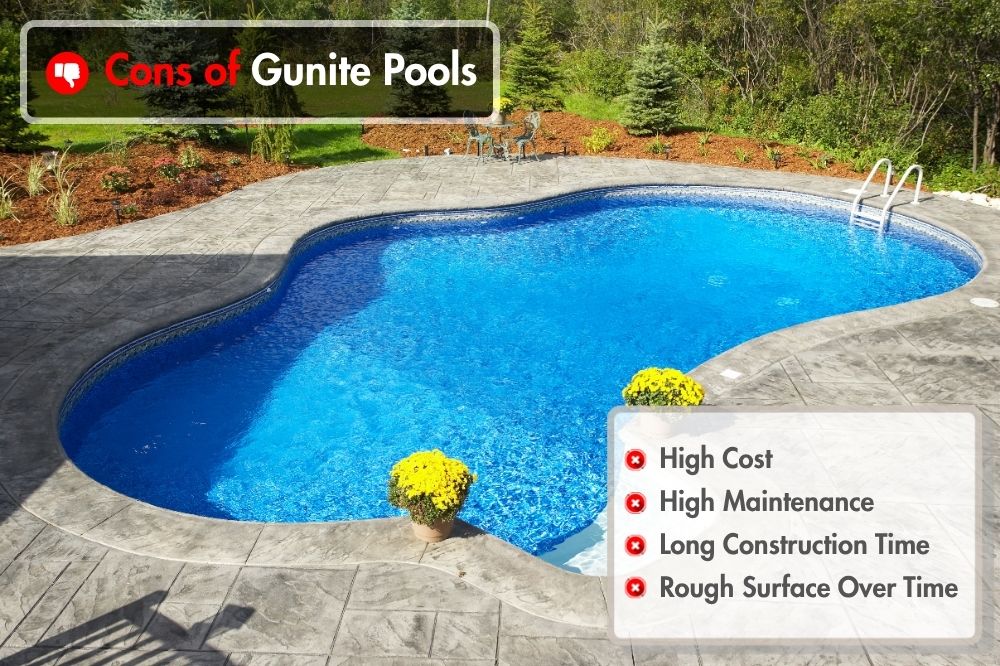
The following are a few cons of gunite pools.
- Since cementing materials take longer to dry, the construction process also takes a long time to finish. However, the long construction period is what gives it its durability. It takes about two to three months to finish the entire process. So, you need patience before you take a dip in the pool.
- Gunite pools also develop rough surfaces over time. It makes the swimming sessions uncomfortable and can also cause injuries if you don’t exercise caution. Resurfacing after every set period can prevent roughness in gunite pools.
- Gunite pools are expensive, and the cost of maintenance is also high. The low-end gunite pool construction cost starts at $10,000 and can go up to $80,000 for a luxury pool. As a result, they are considered one of the most expensive pools on the market.
Final Thoughts
Gunite swimming pools are versatile and tough. They are customisable in a wide variety of ways and last a long time. Although they take time to finish, the final product is worth the wait. They add elegance to your home. You can enhance the entire landscape of your backyard with a gunite pool construction. So, to add charm, serenity and value to your home, all you need is a gunite pool.
Also Read: 9 Relaxing Indoor Pool Design Ideas and Its Maintenance
FAQs on Gunite Pool Construction
1. What Is A Gunite Swimming Pool?
A gunite pool is a concrete pool made by spraying a cement-based mixture over a rebar framework.
2. How Long Does Gunite Pool Construction Take?
Typically, it takes 2–3 months, depending on design complexity and weather conditions.
3. Are Gunite Pools Expensive To Maintain?
Yes, maintenance costs are higher due to resurfacing, chemical balance, and algae prevention.
4. Do Gunite Pools Crack Easily?
Surface cracks can occur over time but are manageable with proper repairs and resurfacing.
5. Why Choose A Gunite Pool Over Other Pool Types?
Gunite pools offer unmatched customisation, durability, and luxury appeal compared to vinyl or fiberglass pools.
Author & Expert Review
Written By:  Gaurav Mishra | Civil Engineer & Content Writer
| Credentials: B.E. (Mahavir Swami College, Surat), Registered with Bhagwan Mahavir University (BMU). Experience: Civil Engineer with 5+ years of content writing experience, currently writing impactful articles for Gharpedia, part of SDCPL. Expertise: Specializes in writing well-researched content on residential construction, construction materials, design planning, on-site practices, and safety, blending technical accuracy with everyday clarity. Find him on: LinkedIn |
Verified By Expert:  Ravin Desai – Co Founder – Gharpedia | Co Founder – 1 MNT | Director – SDCPL
This article has been reviewed for technical accuracy by Ravin Desai, Co-Founder of Gharpedia and Director at Sthapati Designers & Consultants Pvt. Ltd. With a B.Tech. in Civil Engineering from VNIT Nagpur and an M.S. in Civil Engineering from Clemson University, USA, and over a decade of international and Indian experience in the construction and design consultancy sector, he ensures all technical content aligns with industry standards and best practices.
Find him on: LinkedIn