





Table of Contents
Quick Summary
- Fibreglass is a lightweight, high-strength composite made by reinforcing glass fibres with resin.
- It is widely used in residential, commercial, and industrial construction.
- Common types include glass wool, chopped strand mat, woven roving, pultruded sections, and FRP.
- Fibreglass offers excellent corrosion, moisture, chemical, and fire resistance.
- It provides good thermal and acoustic insulation and dimensional stability.
- Major applications include roofing sheets, wall panels, insulation, doors, tanks, and prefabricated elements.
- Advantages include durability, low maintenance, and long service life.
- Limitations include higher initial cost, brittleness under impact, and limited load-bearing capacity.
Modern construction materials focus on strength, durability, lightweight, and versatility. One such advanced material is fibreglass. It is a high-strength, corrosion-resistant and lightweight material made by reinforcing glass fibres with plastic. It is commonly known as Glass Fibre Reinforced Plastic (GFRP) or Glass Reinforced Plastic (GRP).
It is widely used in residential, commercial, and industrial buildings due to its excellent corrosion resistance, design flexibility, and durability. Fibreglass performs exceptionally well in roofing, insulation, cladding, and prefabricated construction components.
In this blog, Gharpedia explains what fibreglass is, how it is made, its types, properties, applications, advantages, disadvantages, and safety considerations.
What is Fibreglass?
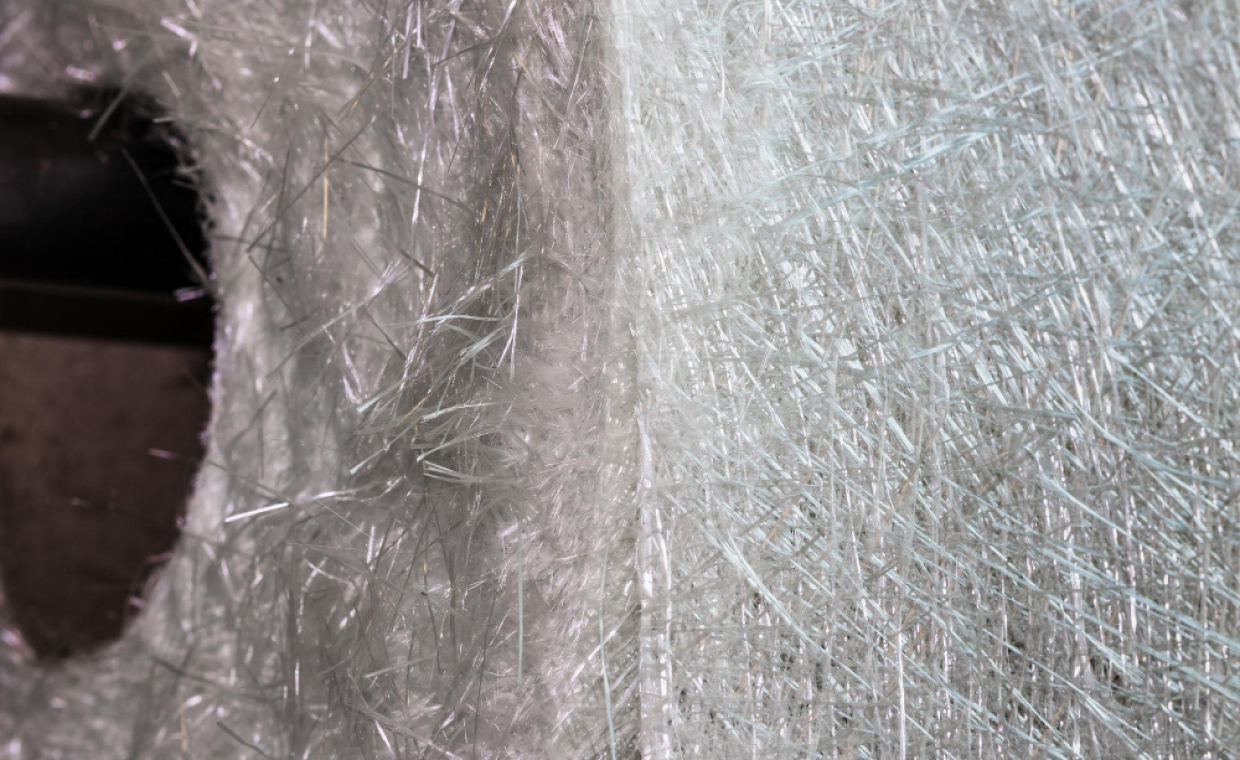
Fibreglass is a reinforced plastic composite material in which fine glass fibres are embedded (reinforced) in a resin matrix such as polyester or epoxy. These glass fibres are tiny filaments (in microns) produced by passing molten glass through superfine holes. The combination of glass fibres and resin gives a composite material that is lightweight yet highly strong and durable. Since glass fibres are reinforced in plastic, fibreglass is also known as Glass Reinforced Plastic (GRP) or Glass Fibre Reinforced Plastic (GFRP). Depending on the type of resin used, fibreglass can have different properties and performance characteristics.
Types of Fibreglass Used in Construction
Glass Wool Fibreglass
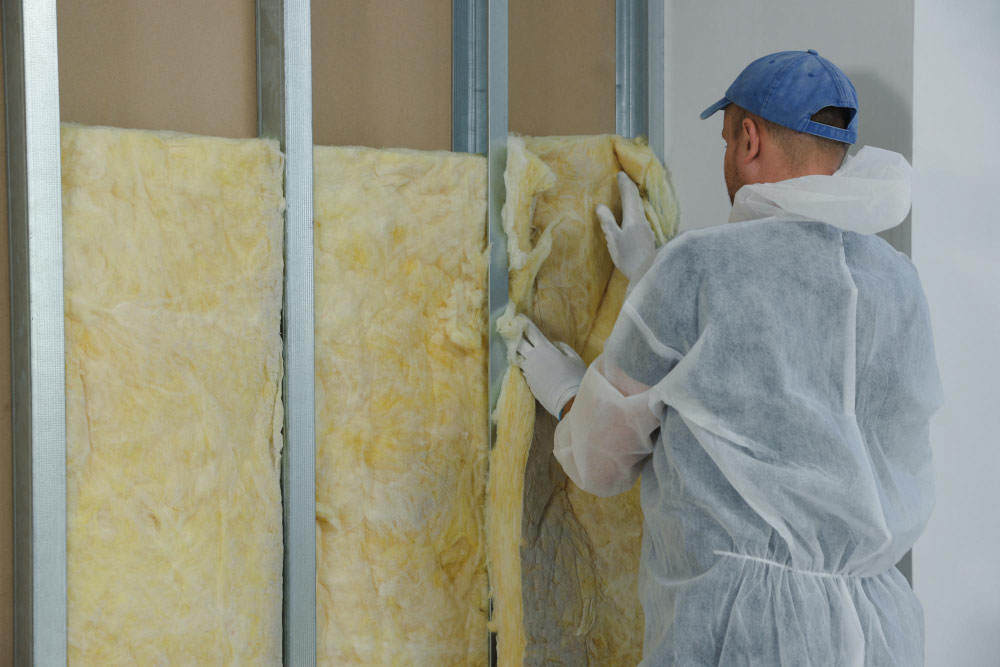
Glass wool has a texture similar to wool and is mainly used for thermal and acoustic insulation. It is commonly installed in walls, roofs, and HVAC systems.
Chopped Strand Mat (CSM)
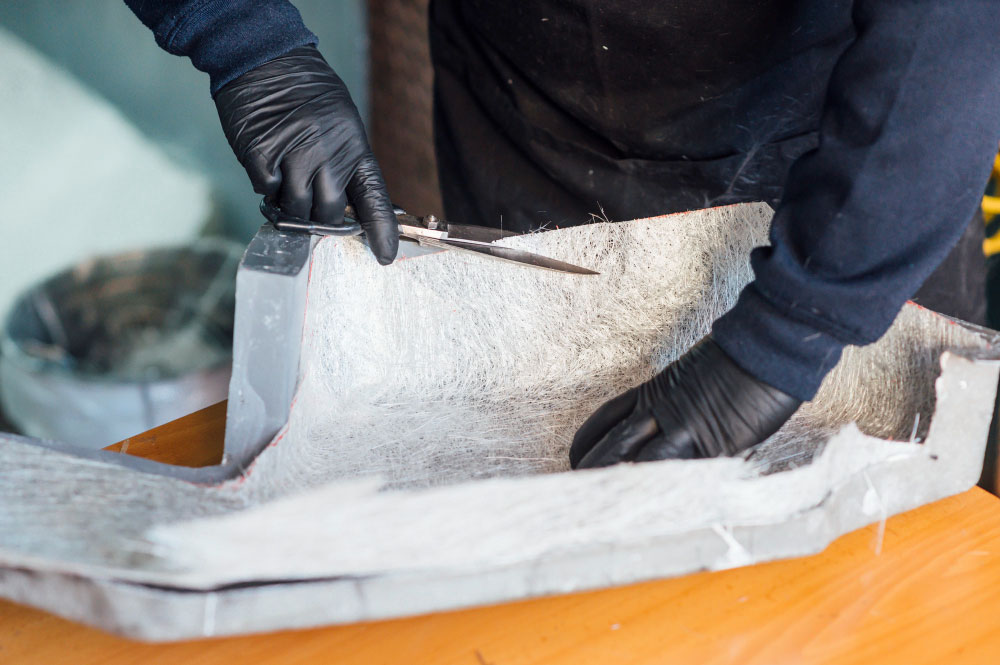
In this type, glass fibres are arranged randomly and bonded together. It is commonly used in roofing sheets, wall panels, and moulded construction components.
Woven Roving Fibreglass
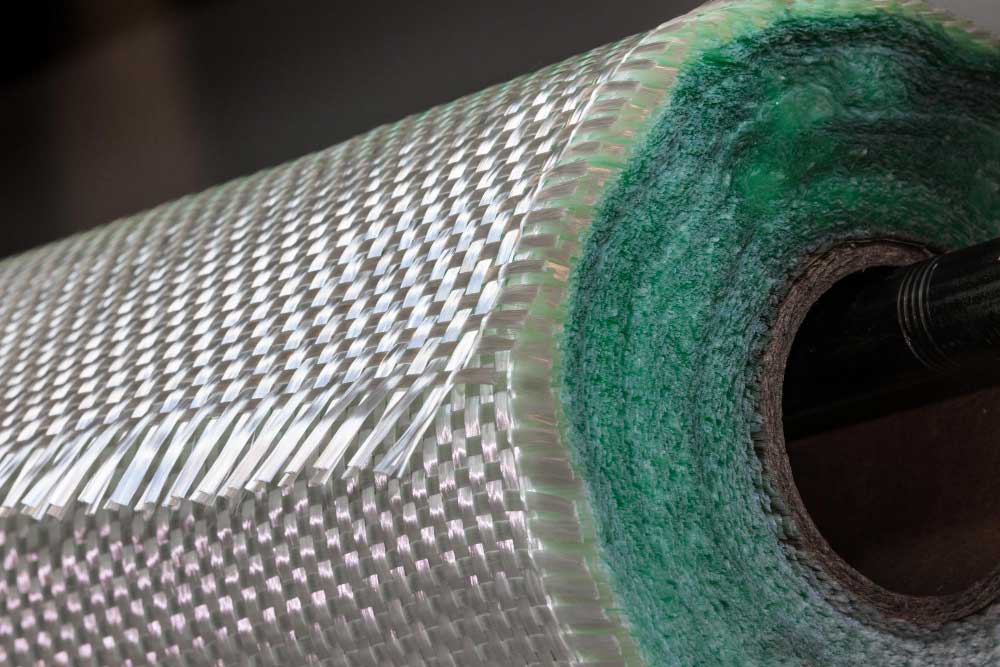
Woven roving is made by weaving continuous glass fibre strands into fabric form. It offers high strength and is often used in load-bearing and structural fibreglass components.
Pultruded Fibreglass Sections
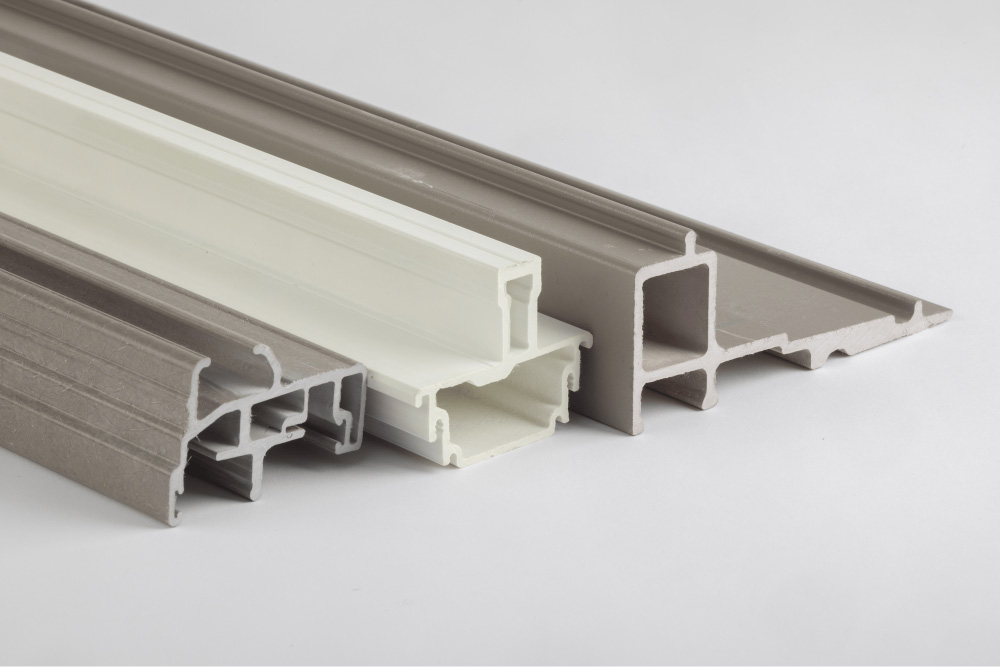
Courtesy - Advanced Fiber Products
Pultrusion of fibreglass is a process where glass fibres and resins are combined and pulled through a heated die (a tool for shaping) to get structural profiles like beams, channels, tubes, etc. Pultruded fibreglass sections are widely used for ladders, handrails, poles, gratings, etc.
Fibreglass Reinforced Plastic (FRP)
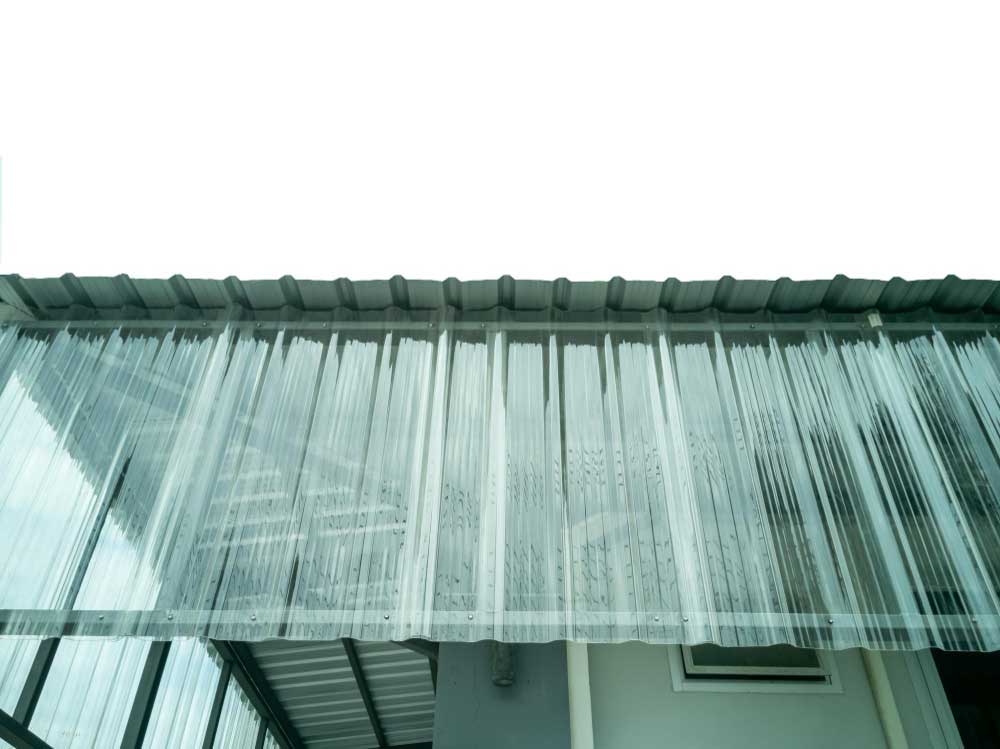
Fibreglass reinforced plastic is commonly used in doors, window frames, water tanks, wall panels, and sanitary fittings.
Properties of Fibreglass
Fibreglass exhibits a combination of physical, mechanical, thermal, and chemical properties that make it suitable for diverse construction applications.
Lightweight & Strong
Fibreglass is a lightweight construction material because of its low density. Despite its lightweight, fibreglass has high tensile strength.
Resistance to Corrosion
Fibreglass does not corrode easily. It has great resistance to most of the chemicals and moisture. However, chemicals like hydrofluoric acid, hot phosphoric acids and strong alkaline substances affect fibreglass. Lack of moisture absorption prevents decay and swelling of fibreglass to a great extent.
Resistance to Fire
Fibreglass is an inorganic material which does not support combustion. It can retain a portion of its strength even at temperatures around 540°C (1000°F). Fibreglass of fire-retardant grades are available for building use.
Thermal Insulation
Fibreglass is a good thermal insulator because it has a low coefficient of thermal expansion. It minimises heat transfer in buildings.
Electrical Insulation
It has very low electrical conductivity. Hence, it is used in electrical and electronic applications such as circuit boards.
Dimensional Stability
Fibreglass does not expand or shrink when exposed to temperature changes.
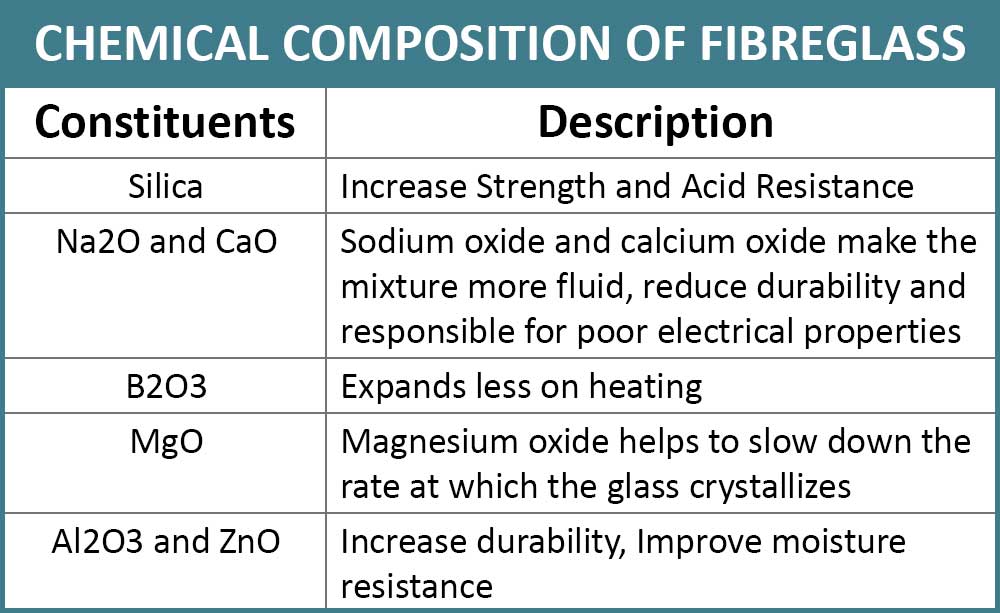
Chemical Composition of Fibreglass
Size and Thickness of Fibreglass
The thickness of fibreglass varies from 1.5mm to 75mm
Standard size of fibreglass – 854mm x 2082mm
Uses of Fibreglass in Construction
Fibreglass is highly versatile and can be moulded into complex shapes, fitting both functional and aesthetic applications. It is used for:
- Roofing sheets
- Wall panels and facades.
- False ceilings and decorative panels.
- Doors, window frames, and louvers.
- Water storage tanks and pipelines.
- Thermal acoustic insulation.
- Bathroom fittings and prefabricated structures.
- Fibre mesh and tapes for enhancing joint strength and crack control.
- Waterproofing and plaster reinforcement.
Advantages of Using Fibreglass
- High tensile strength.
- Lightweight and design flexibility.
- Resistant to weather, chemicals, fire, and moisture.
- Excellent thermal and sound insulation.
- Suitable for industrial and coastal environments.
- Improves the impact strength of concrete and controls shrinkage cracks.
Cost Considerations of Fibreglass in Construction
Fibreglass products may have a higher initial cost compared to PVC or mild steel. However, they prove economical in the long run due to low maintenance requirements, high corrosion resistance, and long lifespan. In coastal areas, industrial zones, and high-humidity regions, steel structures require frequent repainting and anti-corrosion treatments that are more expensive than initial costs. Fibreglass eliminates much of these expenses.
Disadvantages and Limitations of Fibreglass
- Higher initial cost.
- Brittle behaviour under sudden impact.
- Limited load bearing capacity when compared to steel.
- It is non-biodegradable.
- Difficult to repair.
- Considering tropical countries like India, prolonged exposure of fibreglass to intense sunlight, salty air, freeze-thaw cycles, and high-humidity, can degrade fibreglass gradually.
Comparison of Fibreglass with Other Building Materials
| Parameter | Fibreglass | Steel | Aluminium | PVC |
| Weight | Very Lightweight | Heavy | Lightweight | Very lightweight |
| Strength | High Strength-to-weight | Very High | Moderate | Low-moderate |
| Corrosion | Excellent Resistance | Prone (needs coating) | Good resistance | Excellent |
| Maintenance | Low | High (painting, rust) | Low-moderate | Low |
| Fire Resistance | Non-combustible | Fire-resistant | Loses strength in fire | Combustible |
| Lifespan | Long (25-50+ Years) | Long (with maintenance) | Long | Short-moderate |
| Quick Take: Fibreglass offers the best balance of durability, low maintenance, and long-term cost savings compared to steel, aluminium, and PVC, especially in Indian climatic conditions. | ||||
Installation and Safety Concerns
Fibreglass products need a skilled labour force to install or repair. Since fibreglass has tiny fibres of glass, it should be handled carefully. Always wear gloves, masks, and safety goggles to avoid skin and respiratory irritation. When using fibreglass for interiors, always comply with fire safety standards and local building codes.
Maintenance Tips for Fibreglass
- Regularly clean fibreglass with mild detergent and water to remove dust, dirt, and stains.
- Inspect periodically and check for cracks, chips, or wear and tear.
- Repair minor damages without any delay.
- Make sure all the joints, seals and fasteners are intact.
Myth Busters About Fibreglass
| Myth | Fact |
| Fibreglass is fragile and breaks easily. | It is not fragile and has excellent impact resistance. |
| Fibreglass is unsafe in fire. | It is a non-combustible material and retains partial strength at high temperatures. |
| Fibreglass cannot handle Indian weather conditions. | Fibreglass with UV-resistant coatings performs well in the Indian climate. |
| Fibreglass is more expensive than all other materials. | Low maintenance makes it economical long-term. |
Endnote
Fibreglass is a versatile and durable construction material with excellent properties, a wide range of usage, and advantages. It is a lightweight material with excellent tensile strength. Its applications span roofing, cladding, water storage systems, windows, and other building components. Owing to its resistance to weathering, fire and chemicals, fibreglass provides a reliable and long-term solution for contemporary construction needs. Fibreglass has a variety of applications in the construction industry, like roofs, water tanks, windows, cladding, etc. Consult your architect or engineer to identify where fibreglass can be effectively used in your project for better durability and efficiency.
FAQs on Fibreglass
01. What are the applications of fibreglass in house construction?
Fibreglass is used for thermal insulation, wall covering, cladding, windows, flooring, etc.
02. Is fibreglass fire-resistant?
Fibreglass is non-combustible and fire-retardant.
03. What is the lifespan of fibreglass?
Fibreglass can last for several decades, depending on usage and its exposure to harsh environments.
04. Why use fibreglass?
Use fibreglass because it offers an excellent combination of strength, lightweight performance, durability, and cost-effectiveness. It is resistant to corrosion, fire, moisture and organic matters.
05. Is fibreglass a sustainable building material?
Fibreglass improves energy efficiency by reducing heating and cooling loads. It is non-recyclable; however, it has a long lifespan and requires minimal maintenance. s
06. Is fibreglass waterproof?
Fibreglass is water-resistant and does not absorb water. However, if water seeps in through joints, seams, or damaged surfaces can allow water ingress and lead to mould growth.
07. Can fibreglass be painted?
Yes, fibreglass in non-porous material and can be painted.
08. Is fibreglass better than PVC?
Yes, fibreglass is better than PVC in many ways. It is stronger, durable, and has better heat resistance than PVC.
Author & Expert Review
Written By:  Nidhi Patel | Civil Engineer & Content Writer

| Credentials: B.E. (Mahatma Gandhi Institute of Technical Education and Research Centre), Registered with Gujarat Technological University (GTU). Experience: Civil Engineer with 3+ years of content writing experience, currently writing blogs for Gharpedia, part of SDCPL. Expertise: Specializing in SEO-optimized blogs and long-form articles focused on home improvement, construction, interiors and architect topics. I create well-researched, reader-focused content that balances technical accuracy with clarity, making complex subjects easy to understand. Find her on: LinkedIn |
Verified By Expert:  Shekhar J. Parikh Co Founder – Gharpedia | Director – SDCPL
 Shekhar J. Parikh Co Founder – Gharpedia | Director – SDCPL
This article has been reviewed for technical and execution accuracy by Shekhar J. Parikh, Director and Consulting Engineer at Sthapati Designers & Consultants Pvt. Ltd. With over 40 years of experience in civil engineering, project execution, and construction management across Gujarat and Maharashtra, he ensures the content reflects practical site knowledge, quality control standards, and industry best practices, while also supporting informed decision-making for property buy, sell, and rent considerations.
Find him on : Linkdin