





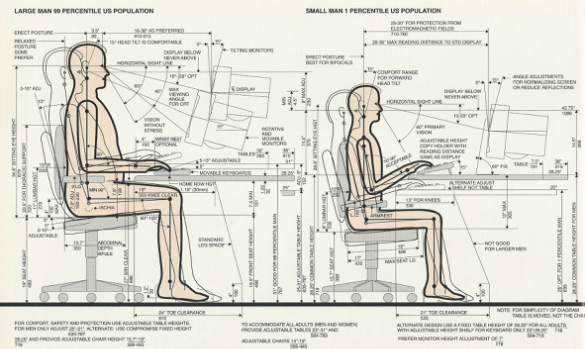
Ergonomics [ uh · guh · naw · muhks ]
The study of working conditions, especially the design of equipment and furniture, in order to help people work more efficiently.
Explanation
Technical Meaning: Ergonomics is the science of designing environments, products, and systems that optimize human well-being and overall system performance. In architecture and interior design, ergonomics focuses on creating spaces that accommodate human needs, improve comfort, efficiency, and safety. This includes the design of workspaces, furniture, and tools to reduce strain and prevent injuries. Ergonomic principles consider factors such as posture, movement, and user interaction with their environment, ensuring that designs enhance usability and accessibility.
Simple Meaning: Ergonomics is about making spaces and objects comfortable and easy to use. It’s designing things like chairs, desks, and tools so that they fit well with how people move and work, helping to prevent discomfort and injuries. Ergonomics is the science of designing environments, tools, and systems to fit the people who use them. It focuses on creating spaces and objects that support comfort, efficiency, and safety in everyday activities. This includes designing chairs, desks, computer setups, and other equipment to align with human movement and capabilities, reducing the risk of strain or injury and enhancing overall productivity and well-being.
Definition in One Word: Comfort