





Table of Contents
Quick Summary
- What is a green Building? It’s not about the colour code, but its about eco-friendliness of the building
- A green building is an approach to sustainable and eco-friendly architecturethat minimises environmental impact throughout a building’s life cycle.
- It focuses on efficient use of energy, water, materials, and natural resources.
- Green buildings aim to reduce carbon emissions, waste generation, and energy consumption.
- Key features include energy-efficient design, water conservation systems, sustainable materials, and waste reduction.
- Life-cycle assessment helps evaluate environmental impact from construction to demolition.
- Green buildings enhance indoor environmental qualitythrough better air, lighting, and comfort.
- They support economic benefit such as lower operating costs and higher property value.
- Certification systems like LEED and IGBCpromote green practices.
- Green architecture contributes to a healthier planet and sustainable future.
What is a green building – you may not have a comprehensive idea about the concept. A green building is not just a trend; it is a necessity for creating a sustainable future. Humans’ meddling with nature restlessly and relentlessly continues to impact the environment in a negative manner.
We know that the buildings we construct do not exist in isolation. They all interact with the surroundings, often contributing to environmental degradation through energy consumption, water use and emissions.
That is why even the way we design and construct buildings plays a crucial role in shaping a greener planet for future generations as modular design architecture. That is where the concept of green buildings emerges as a practical and responsible approach to modern construction.
What is a Green Building?
In simple words, it is an environmentally friendly and environmentally responsible building designed to be energy-efficient, resource-efficient and sustainable throughout its lifecycle. Environmental benefits of green building are making them a need for tomorrow’s safe planet.
Green buildings matter today because they aim to reduce environmental impact while improving the quality of life for occupants. They address key challenges like rapid urbanisation and climate change due to global warming and also resource depletion. The advantages of green building are interesting enough.
Key Benefits of Green Buildings
The key benefits of green buildings are:
- Reduce energy use and carbon emissions
- Conserve water through efficient systems
- Improve indoor air quality and occupant health
- Lower long-term operating and maintenance costs
- Increase property value and sustainability compliance
Green building is an ecofriendly architecture which proves that modern architecture can coexist with nature without causing harm.
If you are still wondering why green buildings are important, you must understand that these buildings come with several environmental benefits.
‘Renee Cho,’ author of The How and Why Green Building, published in Columbia Climate School, points out that buildings around the world account for more than 40 percent of energy use and almost a third of greenhouse gas emissions.
According to the United Nations Environment Programme projects, if we continue with business as usual in the construction sector, these emissions will be more than double by 2030.
This makes sustainable construction not just desirable, but essential.
8 Goals of Green Buildings

‘Charles Lockwood’ (author of the article – Building the Green way. Published on hbr.org) Green buildings, as many know, have less negative impact on the environment than standard buildings. Their construction minimises on-site grading, saves natural resources by using alternative building materials, and recycles construction waste rather than sending truck after truck to landfills.
A majority of a green building’s interior spaces have natural lighting and outdoor views, while highly efficient HVAC (heating, ventilating, and air-conditioning) systems and low-VOC (volatile organic compound) materials like paint, flooring, and furniture create a superior indoor air quality.
Green buildings are a goal-oriented phenomenon with several factors contributing to making it a sustainable architectural piece; let’s have a look at the features of green buildings, green building benefits, the need of green building, environmental benefits of green building and economic benefits of green building:
01. Life Cycle Assessment
Evaluating environmental impacts from the building’s construction to demolition, including materials, transport and usage.
02. Design Efficiency
Optimise building’s orientation, layout, materials, and efficiency at the design stage for maximum performance.
03. Energy Efficiency in Green Building

Green buildings prioritise the use of natural ventilation, light and energy-efficiency systems to reduce energy consumption.
04. Water Usage
Reduce water usage and conservation through efficient fixtures, rainwater harvesting and recycling systems.
05. Sustainable Materiality
Strict usage of eco-friendly, recycled, or locally sourced materials to minimise carbon footprint.
Remember that these materials help cut down on costs and significantly reduce construction waste that ends up in landfills.
06. Operations and Maintenance
Ensuring the long-term sustainability of a project through efficient management and regular upgrades.
07. Indoor Environmental Quality Enhancement

Courtesy - thearchiblog
Enhancing indoor air quality, lighting, acoustics and comfort.
08. Waste Reduction
Minimising construction and operational waste through recycling and efficient disposal systems.
Types of Green Buildings
- Residential Green Buildings: Sustainable homes and apartments.
- Commercial Green Buildings: Offices and business spaces.
- Institutional Green Buildings: Schools, hospitals and public facilities.
- Retrofitted Buildings: Existing structures upgraded for sustainability.
- Net-Zero and Energy-Positive Buildings: Structures that produce as much or more energy than they consume.
Why Are Green Buildings Important?
The importance of green building is listed as follows:

- Green buildings help create a healthier, more balanced environment. They reduce the pressure on natural resources by using energy and water more carefully.
- Power consumption drops due to better design, natural light entry, and efficient systems. Green buildings can reduce pollution and greenhouse gas emissions. Over time, the cities may become cleaner and more liveable.
- Green buildings can have a positive impact on people’s daily lives due to better air quality, daylight, and non-toxic materials.
- Reduced utility bills and maintenance costs: these are immediate economic benefits of green buildings.
- Increased property value and market demand.
Green Building Certifications

In the United States alone, it is estimated that 39 per cent of total energy use and 38 per cent of the total carbon dioxide emissions are attributed to buildings.
These statistics show the role that buildings have to play in influencing global warming and environmental degradation, urging the widespread adoption of green buildings. Hence, green building programs were created to regulate the environmental impact of buildings.
There are several Green Building Certifications available, according to each country and state.
1. Leadership in Energy and Environmental Design (LEED)
Leadership in Energy and Environmental Design is the primary rating system for green buildings in the world developed by the U.S. Green building council. It defines green building as “the planning, design, construction, and operations of buildings with several, foremost considerations: like energy use, water use, indoor environmental quality, material section and the building’s effects on its site.”
LEED is a certification program that has played a major role in the proliferation of green buildings as a concept because it provides a framework on which modern architecture and buildings can be assessed by all the stakeholders involved.
2. Green Built Homes Certification Program (GBHCP)
The Green Built Homes Certification Program is a US state-wide green-building certification system that is controlled by the Green Built Alliance.
3. Indian Green Building Council (IGBC)
India’s leading body for green building certification, the Green Building Council (IGBC) handles the certification process and also provides a wide range of services that include designing new green building rating programmes, certification services and green building training courses. The group also hosts Green Building Congress, a yearly flagship event on green buildings. Their rating system, however, is more western and needs to be customised to the Indian climate, culture and technology.
Projects That Are Actively Adapting Green Methods
Architects and developers from all over the globe are setting a benchmark in architecture by creating structures that are breaking new barriers for sustainability.
1. Taipei 101 by C.Y Lee & Partners
Project Type: Multi Storeyed Building
Location – Taipei, Taiwan

Currently, it is considered the world’s tallest green building as measured by LEED standards. The structure was designed to have double-pane windows, which can reflect external heat by about 50 per cent and recycle 20-30 per cent of the water that meets the building’s needs.
Additionally, the tower is set up to save 18 percent of its energy, which is 14.4 million kilowatt-hours of electricity with an expected cost saving of US$1.2 million per year.
2. The Crystal by Perkins + Will, Wilkinson Eyre Architects and Arup Group
Project Type: Event Venue
Location – London, UK
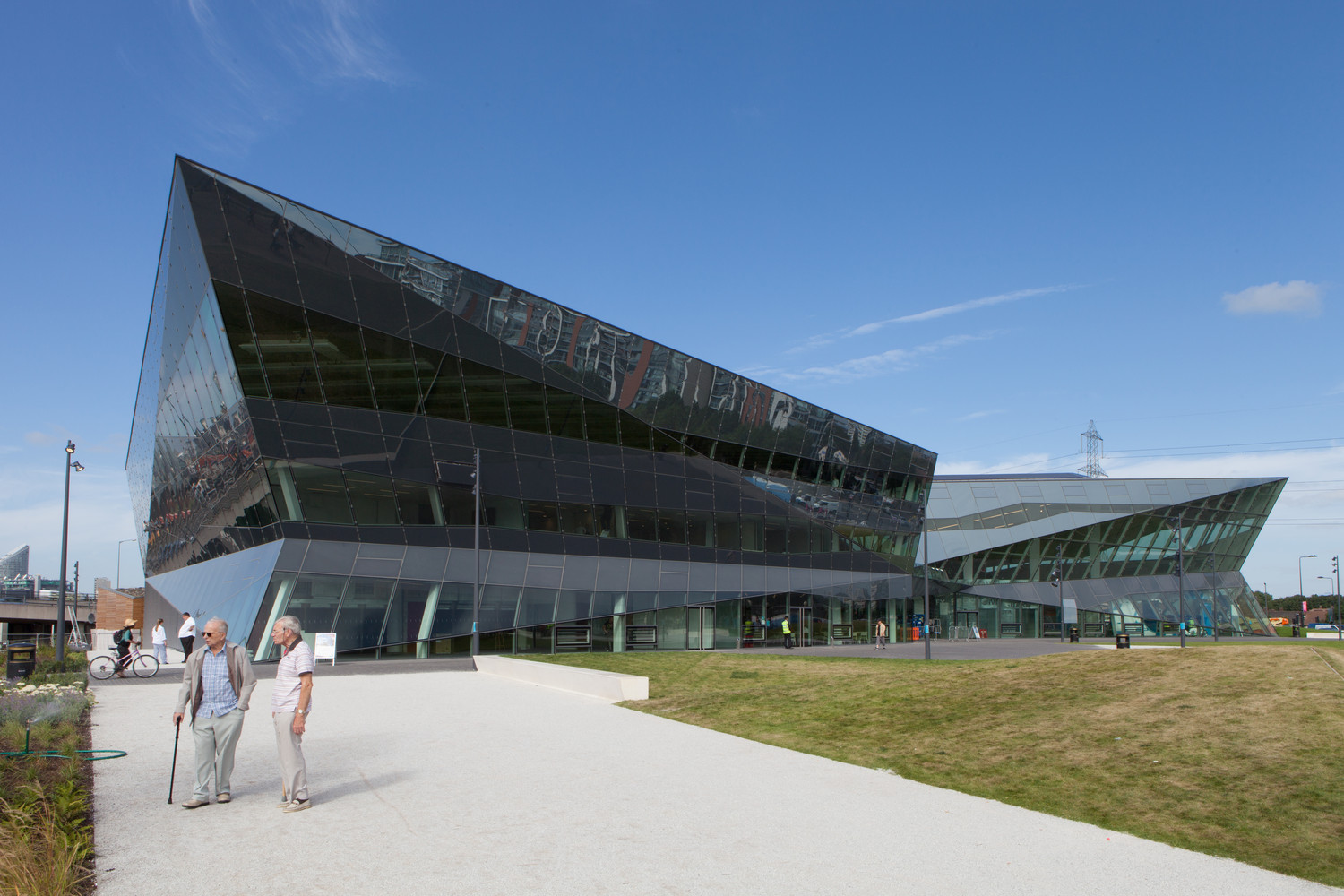
The Crystal is regarded as the most environmentally friendly event venue and the largest exhibition on the future of cities. It was the first structure to be certified as both BREEAM Outstanding and LEED Platinum.
The Crystal features abundant natural lighting as well as an advanced energy management system that is linked to an exterior weather system that regulates all electrical and mechanical equipment.
It is one of the world’s most sustainable buildings, thanks to advanced technology and integrated active and passive design components.
3. Sohrabji Godrej Green Business Centre by Karan Grover
Project Type: Business Centre
Location –Hyderabad
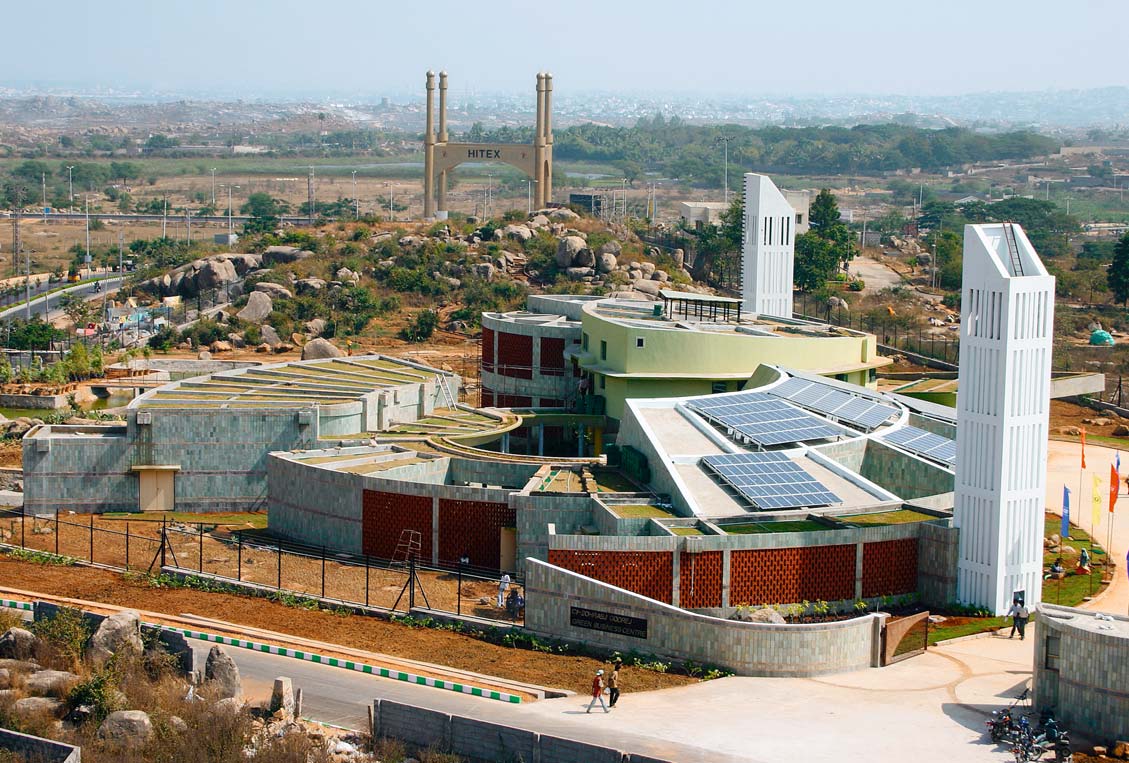
Courtesy - thearchiblog
The Sohrabji Godrej Green Business Centre is the first-ever LEED platinum-certified building that was ever made outside the US.
Using passive design strategies, the plan, shape, forms, materials and different elements like doors, windows etc. all play a huge role in minimising the use of energy. Most of the roof is green, the rest being covered with solar panels that power the entire facility. Rainwater harvesting systems are implemented in the gardens that feed into the ponds.
Traditional building techniques like the use of jail walls and a wind catcher play huge roles in controlling the radiation and heat on the site. A combination of local materials, as well as recycled materials, were used across most of the surfaces.
Common Mistakes in Green Building Construction
1. Planning & Preparation Mistakes
If the builder overlooks climate analysis, it may lead to inefficient orientation, poor daylighting, and higher energy use in the proposed green building.
If the site assessment process is neglected, it may harm the natural drainage and ecosystems of the building. The lack of integrated planning among architects, engineers, and consultants creates performance gaps. Furthermore, if the lifecycle cost analysis is neglected, it can result in expensive long-term maintenance.
Poor material planning can significantly increase waste, the carbon footprint, and operational inefficiency.
2. Colour & Design Mistakes
Use of dark exterior colours exacerbates heat absorption and increases cooling loads. Ignoring reflective or cool roof finishes reduces energy efficiency. Poor façade design limits natural light and ventilation.
Overuse of glass without shading can cause glare and overheating. If the builder neglects passive design principles, like shading devices and thermal mass, it may reduce indoor comfort and increase dependence on mechanical systems.
3. Unsustainable Material Choices
Many developers choose materials based on appearance, availability, or initial cost. They hardly assess their long-term environmental effects. For instance, cheaper high-carbon cement may reduce upfront expenses but increases environmental damage and lifecycle costs over time.
Similarly, the use of imported tiles rather than locally produced ones increases the project’s carbon footprint. It also overlooks opportunities to support local manufacturers.
4. Execution & Finishing Mistakes
Improper insulation installation creates thermal bridges and energy loss. Poor sealing around windows and doors causes air leakage. The use of low-quality sustainable materials reduces durability.
If the builder overlooks green certification standards during construction, it affects performance compliance.
Weak regulatory oversight may result in deviations from eco-friendly specifications, which impacts the energy efficiency of the building. As a consequence, it increases operational costs and compromises the building’s long-term sustainability goals.
Conclusion
The growing number of green buildings worldwide shows the staying power of sustainable design and green architecture as a whole. Through the emerging global consensus on the importance of reducing emissions and environmental impact, green buildings can pave the way for a much more sustainable future.
What is green Building? Now it’s clear that Green building is not a trend only, it maintains some regulations, which continue to be a driving force in transforming structures into ‘living buildings’. These buildings are seamlessly integrated into their environment. There is no doubt about their importance as a tool for change. Green buildings slowly but surely are becoming the norm and soon there might come a day where they become the rule, which indeed will be a much greener future.
FAQs on What is a Green Building
1. What is a Green Building?
A green building is a structure designed to reduce environmental impact and improve resource efficiency.
2. What are the Main Benefits of Green Buildings?
Lower energy costs, reduced emissions, better indoor air quality, and long-term sustainability are some of the main benefits of green buildings.
3. Why are Green Buildings Important?
They help combat climate change, conserve resources, and promote healthier living environments.
4. What are the Common Features of Green Buildings?
Energy efficiency, water conservation, sustainable materials, waste management, and natural lighting are the common features of green buildings.
5. Are Green Buildings More Expensive?
Initial costs may be higher, but long-term savings and environmental benefits outweigh them.
References
Renee Cho (2016) Building the Green way. [Online] Available from: https://news.climate.columbia.edu/2016/05/03/the-how-and-why-of-green-building/
Charles Lockwood (2006) Easy and simple ideas for a beautiful pooja room. [Online] Available from: https://hbr.org/2006/06/building-the-green-way
Author & Expert Review
Written By:  Swagata Chatterjee | SEO Content Writer & Editor

| Credentials: MA (Calcutta University, Kolkata). Experience: Content Writer and Editor with 19 years’ experience of business content writing and editing, currently writing SEO-optimized, readers’-friendly articles for Gharpedia, part of SDCPL. Expertise: Specializes in writing well-researched content on lifestyle, home décor, , lifestyle, safety, home appliances and gadgets, on-site SEO Optimization, blending technical accuracy with general reader’s ability to learn the topics. Find her on : Linkedin |
Verified By Expert:  Mansi Shah – Architect & Architectural Content Writer, SDCPL | B.Arch.
 Mansi Shah – Architect & Architectural Content Writer,
 This article has been reviewed for architectural and interior design accuracy by Mansi Shah, an Architect associated with Sthapati Designers & Consultants Pvt. Ltd. (SDCPL). With over 25 years of professional experience in architectural planning, design development, detailing, and on-site execution of residential, commercial, and institutional projects, she brings deep expertise in architecture and interior planning, material selection, construction practices, and building bylaws. Her review ensures the content reflects practical design principles, interior space efficiency, and industry-aligned architectural standards.
Find him on: LinkedIn