






What is Plaster?
Plaster is the most important and oldest building material used in various types of building and residential construction projects.
The primary function of plastering is to protect and preserve the materials used for building components. But in addition, they may provide decorative effects or may be required to be treated further.
Plastering is a process of applying mortar in one or more coats on concrete, brickwork, stone masonry surface or lathing. It must be durable as it prevents the moisture penetration and should be able to weather uniformly.
It should also be pleasing in appearance. These properties depend upon the material used, a composition of the mix, and a level of degree of mechanical bond between the plaster and the backing surface and workmanship.
Lack of bond with the backing, cracking, crazing of surface and discoloration (stain) are major defects in plastering.
There are various aspects on the basis of which plaster is classified such as ingredients, Finishes, Coat, Popularity and proportion.
Smooth plaster, sand faced plaster, textured plaster is some of the plasters classified on the basis of finishes.
The interior walls which are of exposed brick wall concrete structure are all leveled with a thick covering of cement-sand or gypsum. This activity is called internal plastering. If the same activity is done on the exterior then it is called exterior plastering. The ways of doing plastering on the internal and external surface are quite different and not the same.
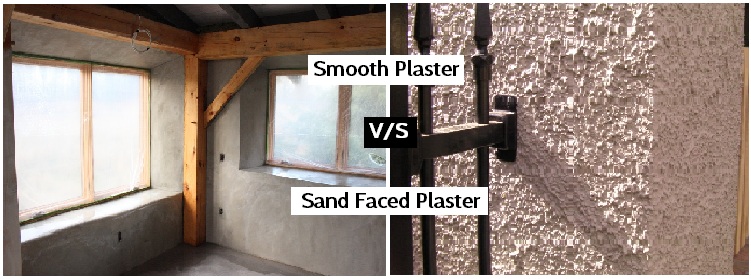
Brief Comparison of Smooth Plaster V/S Sand Faced Plaster:
Above are the various comparisons between smooth finished plaster v/s sand faced plaster. Along with the various properties of plaster serving above functions as decor, keep the above points before selecting any type of plaster.
Also Read:
Ready Mix Mortar for Brickwork, Plaster and Repair Maintenance!
What are the Pros and Cons of Masonry in Construction?
Portland Slag Cement: All You Like to Know!
Image Courtesy: image 1(a)