






Table of Contents
Quick Summary
- Online marketing helps home improvement companies attract local homeowners actively searching for renovation and repair services.
- A fast, mobile-friendly website with dedicated service pages improves credibility and conversions.
- Local SEO and an optimized Google Business Profile increase visibility in local search results.
- Content marketing builds trust by answering common homeowner questions.
- Social media platforms work best when showcasing real project photos and videos.
- Online reviews strongly influence homeowner decisions and improve local rankings.
- Paid advertising generates faster leads when targeted correctly.
- Email marketing helps maintain relationships with past and potential clients.
- Tracking lead sources and conversions helps improve marketing ROI.
- Consistent online marketing creates long-term brand visibility and steady project inquiries.

Running a home improvement business has never been more competitive. Homeowners today begin their search for a contractor, renovator, or interior specialist long before they pick up the phone. They read reviews, browse project photos, compare local providers, and read educational content like here at SEO company Victoria, all from a screen. The businesses that show up consistently and credibly during that research phase are the ones that win the job.
That is the core argument for taking online marketing seriously as a home improvement professional. This is not about chasing social media trends or spending on ads blindly. It is about building a predictable system that puts your business in front of homeowners at the exact moment they need what you offer.
Why Home Improvement Businesses Need a Different Marketing Approach
Most industries can rely on broad, national brand awareness to drive traffic. Home improvement does not work that way. A homeowner in need of a kitchen renovation is not looking for a company three cities away, they want someone local, reputable, and available. This geography-first dynamic shapes every marketing decision you should make.
Your marketing goal is not just to be visible online. It is to be visible to the right homeowner, in the right location, at the right stage of their decision-making process. Someone searching “how to plan a bathroom renovation” is at a very different stage than someone searching “bathroom renovators near me.” Both audiences matter, but they require different content and different calls to action.
Building the Foundation: Your Website
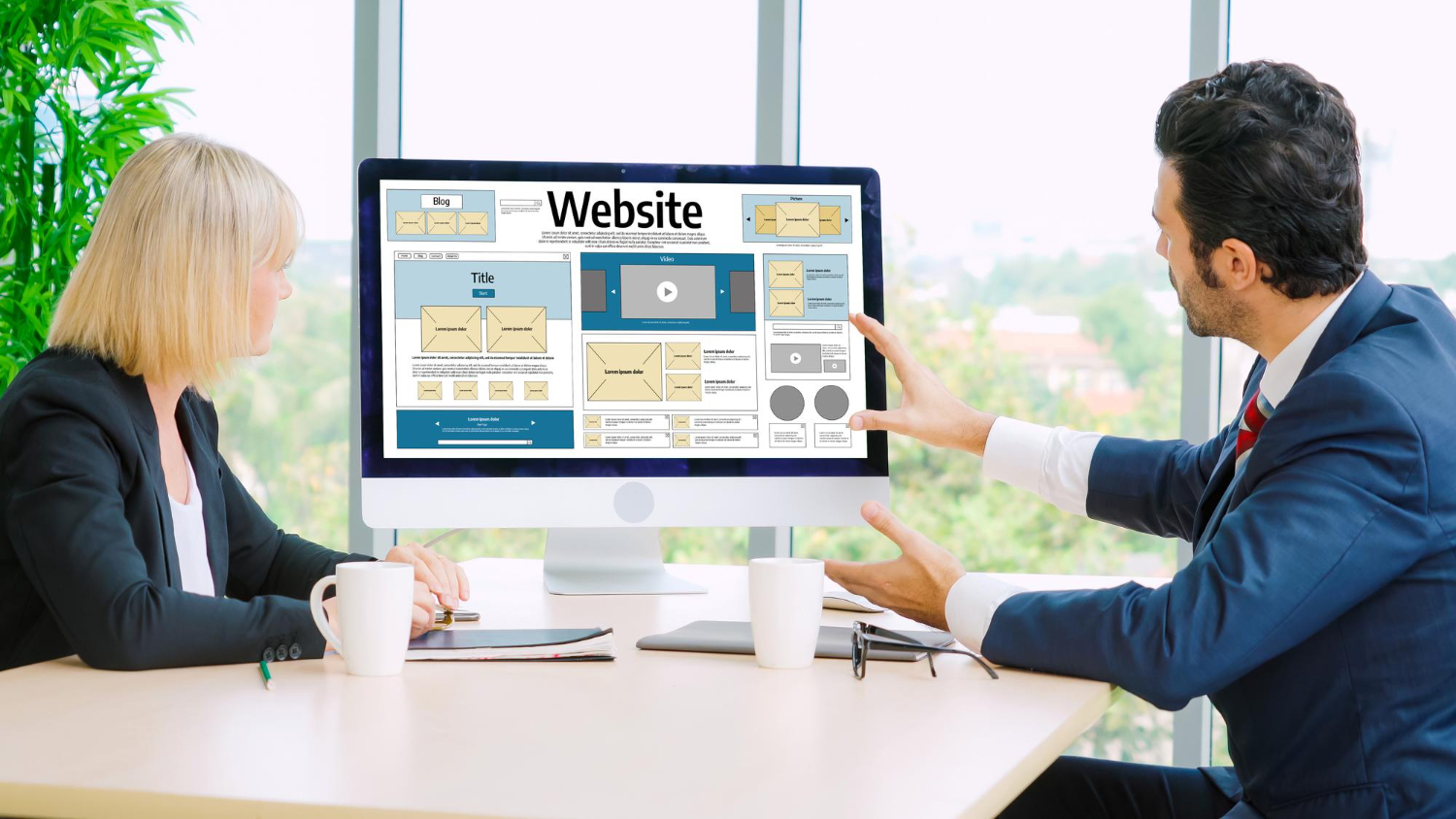
Before any traffic strategy makes sense, your website needs to actually work. For home improvement businesses, this means three non-negotiable things.
Speed on mobile devices
The majority of home service searches happen on smartphones. If your site takes more than three seconds to load on a mobile connection, a significant number of visitors will leave before seeing a single photo of your work. Compress your images, use a reliable hosting provider, and run your site through Google’s PageSpeed Insights regularly.
Clear, location-specific service pages
A single page titled “Services” is not enough. If you offer kitchen renovations, bathroom remodels, basement finishing, and exterior cladding, each of those deserves its own dedicated page, one that clearly states what the service involves, which areas you serve, and what a client can expect from working with you. This structure helps search engines understand exactly what you do and where.
Visible trust signals
Licenses, insurance information, associations, awards, and years in business should appear prominently. For homeowners spending tens of thousands of dollars on a renovation, credibility markers are not optional. They are often the deciding factor between clicking your number or moving to the next result.
Local SEO: How Contractors Get Found on Google
Search engine optimization for a home improvement company is fundamentally local. The goal is to appear prominently when a homeowner in your service area types a query related to what you offer. This involves several layers of work that build on each other over time.
Google Business Profile

Your Google Business Profile is arguably your most important online asset after your own website. It powers the map listings that appear at the top of local search results, the block of three businesses with star ratings and distance information that homeowners see before anything else.
A well-maintained profile includes accurate business hours, a genuine description of your services, photos of completed projects (updated regularly), a complete list of service categories, and active management of your reviews. The review component deserves particular attention. Homeowners rely heavily on what past clients say, and a business with forty detailed reviews will consistently outperform one with five, regardless of website quality.
Responding to every review, positive or negative, signals to both Google and prospective clients that you are an attentive, professional operation. A brief, measured response to a negative review often builds more trust than a wall of perfect scores.
On-Page Signals That Matter
Beyond your profile, every page on your website should speak clearly to a specific service in a specific geography. A page about deck construction in a particular suburb should naturally reference the area, the type of climate, local building considerations, and the materials commonly used in that region. This is not about repeating phrases mechanically; it is about writing content that genuinely reflects local expertise.
Headings, page titles, and meta descriptions all play a role in communicating topic relevance to search engines. A page titled “Home Renovation Services” is far less effective than one titled “Kitchen & Bathroom Renovation in [City Name], Licensed Contractor.” The specificity signals relevance.
Building Authority Through Links and Citations
Search engines assess the credibility of a website partly by looking at who else online references it. For a home improvement business, this means getting listed in relevant directories, earning mentions from local news outlets or community websites, and potentially contributing expert content to home-focused publications like Gharpedia, which connects homeowners with qualified contractors and construction professionals.
Local chamber of commerce listings, supplier directories, and trade association pages all carry value. The quality of these references matters far more than the number, a single mention from a well-regarded industry publication is worth more than dozens of low-quality directory listings.
Content Marketing: Becoming the Expert Homeowners Trust
One of the most sustainable ways to attract qualified leads over time is to consistently publish content that answers the questions your prospective clients are already asking. This approach works particularly well for home improvement businesses because the renovation and construction process is genuinely confusing for most homeowners.
Think about the questions you hear repeatedly from clients before a project begins. How long does a kitchen renovation typically take? What permits are required for a basement conversion? What is the difference between engineered hardwood and solid wood flooring? Each of those questions represents an opportunity to produce a useful, well-researched article that draws organic search traffic.
This type of content achieves two things simultaneously. It positions your company as a knowledgeable, trustworthy resource, which matters enormously in an industry where trust is hard to earn. And it allows your website to rank for a broader range of searches, including early-stage research queries that are difficult to capture with service pages alone.
A realistic content schedule for a small to mid-sized renovation business might look like two to three articles per month, each targeting a specific question or topic relevant to your trade and location. Over the course of a year, this builds a library of content that continues drawing traffic long after each piece was written.
Social Media: Showing Your Work, Not Selling It
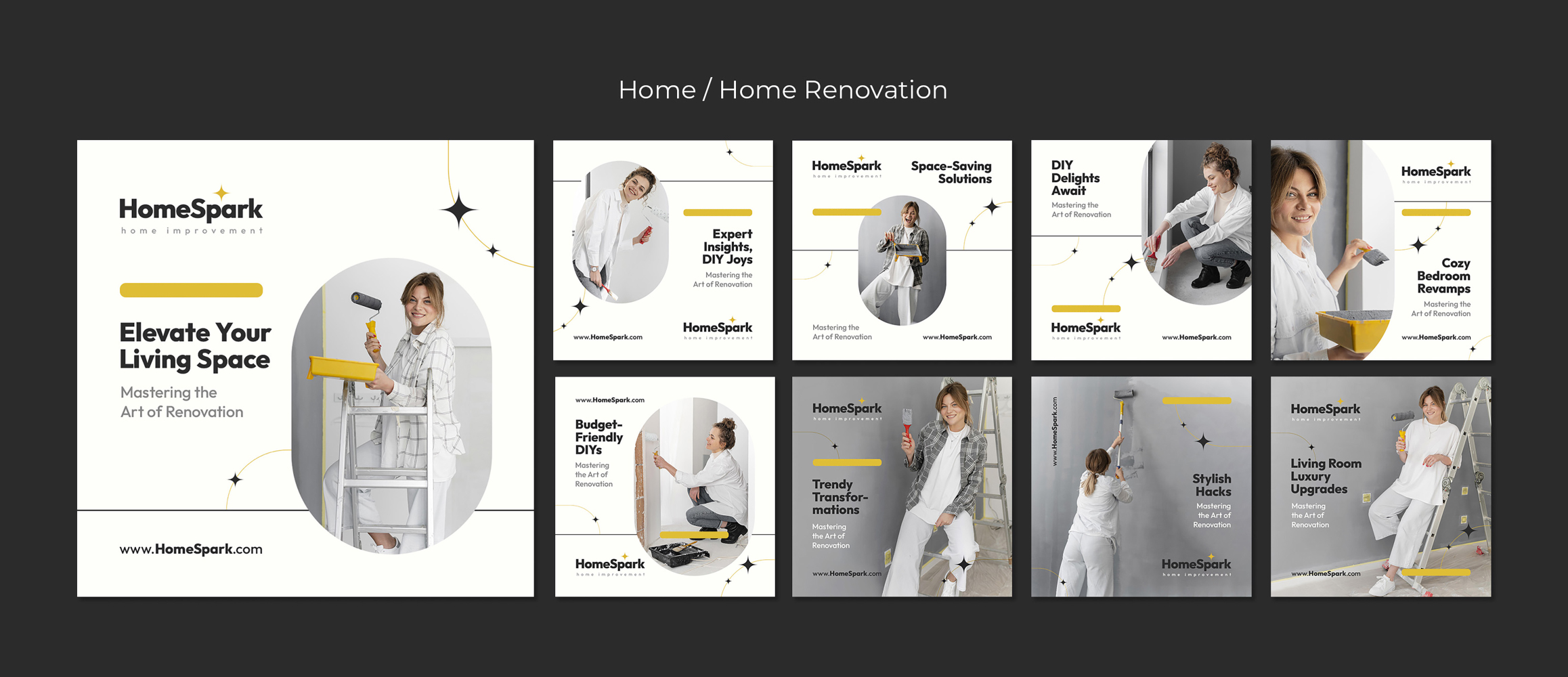
Instagram, Facebook, and increasingly Pinterest and Houzz are valuable channels for home improvement businesses, but not for the reasons most business owners assume. The companies that generate real business from social media are not the ones posting promotional graphics and discount offers. They are the ones consistently documenting real projects.
Before-and-after photo sets from actual jobs tell a more compelling story than any advertisement. A short video of a tile installation, a time-lapse of a bathroom gut renovation, or a walkthrough of a completed kitchen remodel gives prospective clients exactly what they want to see: evidence that you can do the work well.
The goal of your social presence is to make someone stop scrolling, spend time looking at your content, and then either follow your account or click through to your website. That kind of engagement compounds over time. A homeowner who follows your account today may not need your services for eight months, but when they do, you are already familiar and credible.
Consistency matters more than production value. Posting three times a week with a decent smartphone camera outperforms posting once a month with professional photography.
Online Reviews: The Referral System of the Digital Age
Word of mouth has always been the backbone of home improvement businesses. Online reviews are simply the digital version of that same mechanism, but they scale in a way that a personal recommendation never could.
A homeowner who had a great experience with your company can now share that experience with every potential client who searches for your business over the next several years. That single review, posted once, continues influencing decisions indefinitely.
The most effective strategy for generating reviews is simple: ask. After completing a project successfully, send the client a short message thanking them for the opportunity and including a direct link to your Google Business Profile review page. Make the process effortless. Most satisfied clients are happy to leave a review when asked directly, they simply do not think to do it unprompted.
Timing matters. Asking immediately after project completion, while the experience is fresh and the client is pleased with the result, produces far better results than asking weeks later.
Paid Advertising: When and How to Use It
Organic strategies, SEO, content, and social media, take time to produce results that’s explained here in detail at SEO Victoria BC. For businesses that need leads in the short term, paid advertising through Google Local Services Ads or Google Search Ads can fill the gap while longer-term strategies develop.
Google Local Services Ads are particularly well-suited to home improvement businesses because they appear above standard search results and operate on a pay-per-lead model rather than pay-per-click. You only pay when a homeowner contacts you directly through the ad, which makes the cost more predictable and directly tied to actual inquiries.
The critical consideration with paid advertising is targeting. Without careful geographic and keyword targeting, ad spend is wasted reaching people outside your service area or people searching for services you do not offer. Defining exactly who you want to reach, by location, by service type, and by the specific search terms they use, before setting up a campaign will determine whether paid advertising is profitable or merely expensive.
Email Marketing: Staying Connected With Past and Prospective Clients
Email is consistently underused by home improvement businesses, despite being one of the most cost-effective marketing channels available. Past clients represent an enormous opportunity, they already know your work, already trust you, and are statistically more likely to hire you again or refer you to someone they know.
A simple email strategy might include a seasonal newsletter with home maintenance tips relevant to the time of year, a project showcase highlighting recent work, and an occasional special offer for past clients who refer a friend. None of this requires sophisticated software or significant time investment, a straightforward monthly email to a list of a few hundred past clients can generate real business.
For prospective clients who have contacted you but not yet committed, a short follow-up email sequence keeps your business visible without being intrusive. A follow-up three days after a quote, then another ten days later, can make the difference between a lost lead and a booked project.
Tracking What Actually Works
The only way to know whether your marketing efforts are producing a return is to measure them. This does not require complex analytics; a few clear data points tell the story.
Track where your leads come from. Ask every new inquiry how they found you, and record the answer. Over several months, patterns emerge that tell you where to concentrate effort and budget. If sixty percent of your leads come from Google searches and twenty percent from referrals, doubling your investment in search visibility makes more sense than doubling your social media spend.
Track your conversion rate. Of every ten homeowners who inquire, how many become paying clients? If that number is low, the problem may not be your marketing volume but your follow-up process, your pricing communication, or how quickly you respond to initial inquiries. Response time, in particular, has an outsized effect on conversion, homeowners who receive a response within an hour are significantly more likely to book than those who wait twenty-four hours.
Track revenue by channel over time. Some channels generate high inquiry volume but low-value projects. Others generate fewer leads but consistently attract larger, more profitable jobs. Understanding the quality of leads from each source is as important as understanding their quantity.
A Realistic Timeline for Results
Home improvement business owners frequently ask how long it takes for online marketing to pay off. The honest answer depends on where you are starting from, but some general expectations are worth setting.
A well-optimized Google Business Profile can start generating increased calls within four to eight weeks of improvement, particularly if you are in a market where competitors have neglected their profiles. Paid advertising can generate inquiries almost immediately, though profitability typically takes a few weeks of adjustment as you refine targeting.
Organic search rankings through SEO take longer, generally three to six months before meaningful traffic growth becomes visible, and six to twelve months before that traffic translates into a consistent flow of leads. Content marketing compounds over time, with articles written in month one continuing to generate traffic in month eighteen. Social media builds an audience gradually, with engagement typically accelerating after three to four months of consistent posting.
The businesses that see the best results are those that treat online marketing as a long-term investment rather than a short-term tactic. Building a strong digital presence for a home improvement company takes sustained effort, but when it works, it produces a reliable pipeline of homeowners who are already predisposed to trust you before the first phone call is ever made.
Connecting It All
The most effective approach is not to pursue any single one of these strategies in isolation. A home improvement business with a well-optimized website, an active Google Business Profile, a consistent content strategy, and a steady stream of genuine reviews builds a presence that is genuinely difficult for competitors to displace.
Start with the areas most likely to produce results quickly given your current situation. If your Google Business Profile is incomplete, fix it this week. If your website has no location-specific service pages, build them over the next month. If you have never asked a satisfied client for a review, start today.
The companies that consistently win local renovation and construction work are not necessarily the most talented tradespeople in their market; they are the ones that homeowners can find, trust, and contact without friction. Online marketing, done consistently and with clear intent, is how you become that company.
FAQs on Marketing Strategies for Home Improvement Companies
1. Why is online marketing important for home improvement companies?
Online marketing helps home improvement businesses connect with homeowners searching online for renovation, remodeling, and repair services. It improves visibility, credibility, and lead generation.
2. What is the best digital marketing strategy for contractors?
The most effective strategy combines local SEO, Google Business Profile optimization, content marketing, online reviews, and social media promotion to attract local clients.
3. How does local SEO help home improvement businesses?
Local SEO improves visibility in location-based searches like “kitchen remodelers near me,” helping businesses attract nearby homeowners actively looking for services.
4. What type of content should home improvement companies publish?
Businesses should publish blogs, renovation guides, maintenance tips, project showcases, and answers to common homeowner questions to build trust and improve search rankings.
5. Are online reviews important for contractors?
Yes, online reviews build customer trust, improve local search rankings, and influence homeowners when choosing renovation or repair professionals.
6. How long does online marketing take to show results?
Paid advertising can generate leads quickly, while SEO and content marketing typically take 3–6 months to produce steady long-term traffic and inquiries.
Author & Expert Review
Written By:  Nidhi Patel | Civil Engineer & Content Writer

| Credentials: B.E. (Mahatma Gandhi Institute of Technical Education and Research Centre), Registered with Gujarat Technological University (GTU). Experience: Civil Engineer with 3+ years of content writing experience, currently writing blogs for Gharpedia, part of SDCPL. Expertise: Specializing in SEO-optimized blogs and long-form articles focused on home improvement, construction, interiors and architect topics. I create well-researched, reader-focused content that balances technical accuracy with clarity, making complex subjects easy to understand. Find her on: LinkedIn |
Verified By Expert: Ravin Desai – Co Founder – Gharpedia | Co Founder – 1 MNT | Director – SDCPL

This article has been reviewed for technical accuracy by Ravin Desai, Co-Founder of Gharpedia and Director at Sthapati Designers & Consultants Pvt. Ltd. With a B.Tech. in Civil Engineering from VNIT Nagpur and an M.S. in Civil Engineering from Clemson University, USA, and over a decade of international and Indian experience in the construction and design consultancy sector, he ensures all technical content aligns with industry standards and best practices.
Find him on: LinkedIn