





Table of Contents
Quick Summary
- Interior décor trends often return, and two-tone wall painting is making a stylish comeback.
- Two-tone walls add visual interest and energy, especially in boxy or plain rooms.
- Neutral colour combinations like beige, khaki, grey, white, peach, and pastels create a calm, balanced look.
- Proper placement of the dividing line helps correct room proportions visually.
- Low lines suit tall rooms, higher lines suit shorter rooms, and vertical splits work for narrow spaces.
- Masking tape, accurate measurements, and patience are key to cleaning two-tone finishes.
- Zigzag, straight, or patterned divisions add creativity to neutral walls.
- Two-tone wall painting is a simple DIY technique with impactful results.
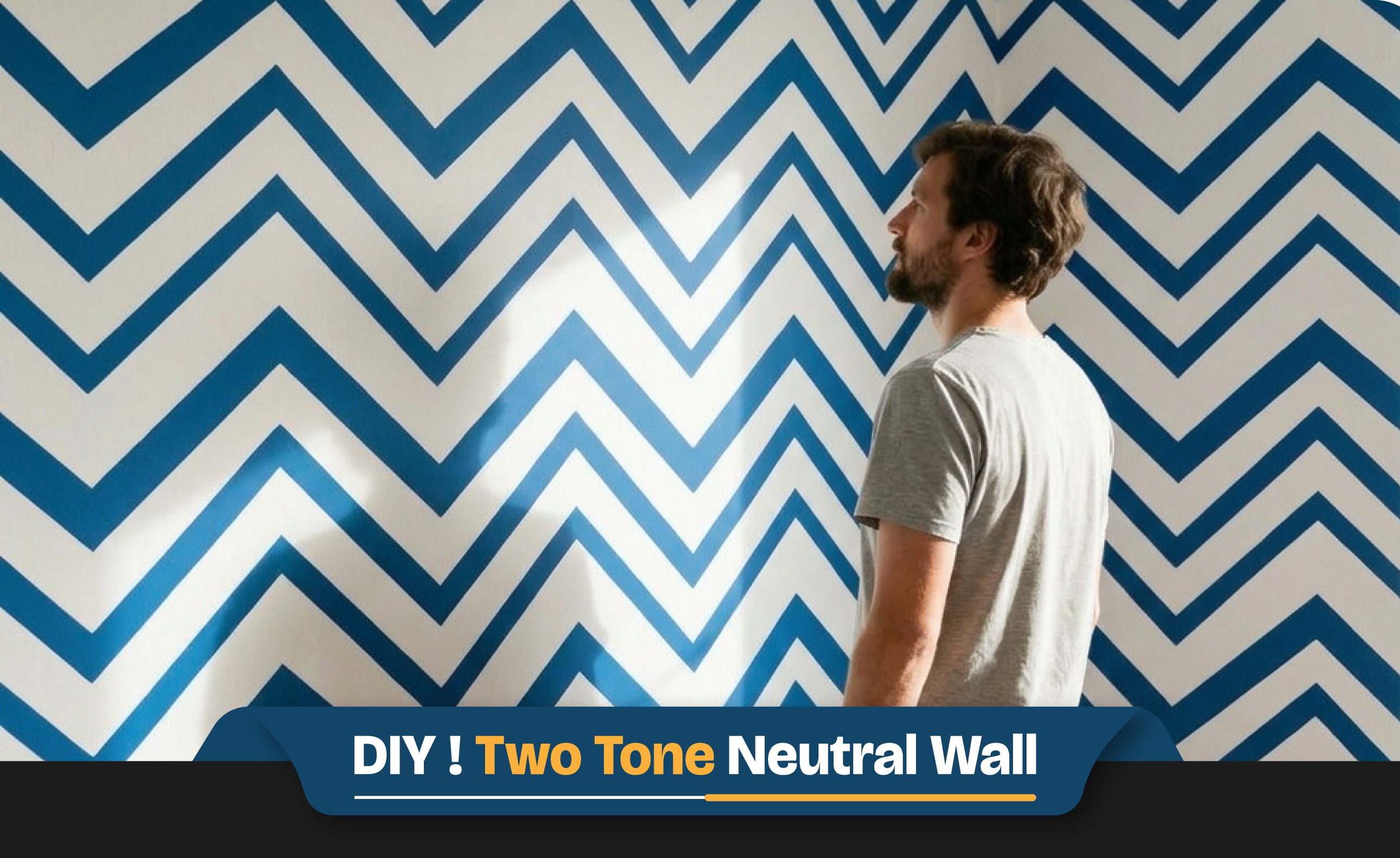
In the interior décor segment, styles fade away and then makes a comeback too! The two-tone wall style, which had disappeared, is now back in the picture and is all set to become a fashion statement for the walls. Through this blog, we share a step-by-step process of how to paint two-tone walls in neutrals.
This project is most useful in boxy rooms that lack an interesting feature to pick out. The idea is to create energy and interest by painting a wall in two-tones of the same colour. The two colours meet with a line at the height most complimentary to the shape of the room. Two-tone painting ideas for bedroom walls can help to make the room feel less boxy.
Art Educationist ‘Ellis A. D.’ in the book A Practical Manual of House Painting, Graining, Marbling and Sign Writing suggests neutral colours such as khaki and beige for two-tone wall paint designs as they create a natural and soothing vibe. Other suitable shades include white, grey, peach and pastel tones of various colours.
Best Placement of the Dividing Line
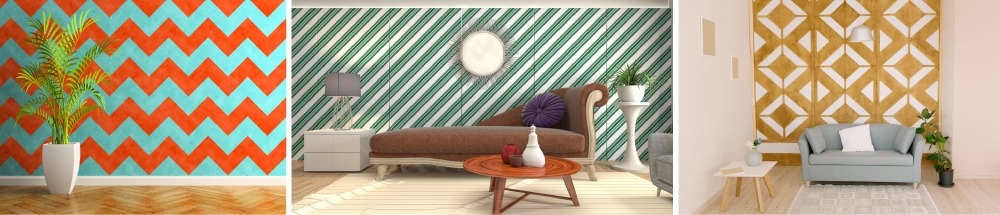
The position of the dividing line plays a crucial role in shaping the appearance of a room. To get that right, here are some tips:
- In tall rooms, keep the line lower to create balance.
- In short rooms, raise the line to make the ceiling appear higher.
- In narrow and long rooms, divide the wall vertically, painting two-thirds of the wall in a lighter shade and the remaining one-third in a deeper tone.
- Painting two walls in different colours can create a lively ambience.
- Creating colors block walls in contrasting colours can add a modern twist to two-tone designs.
Supplies Required to Create Two-Tone Wall
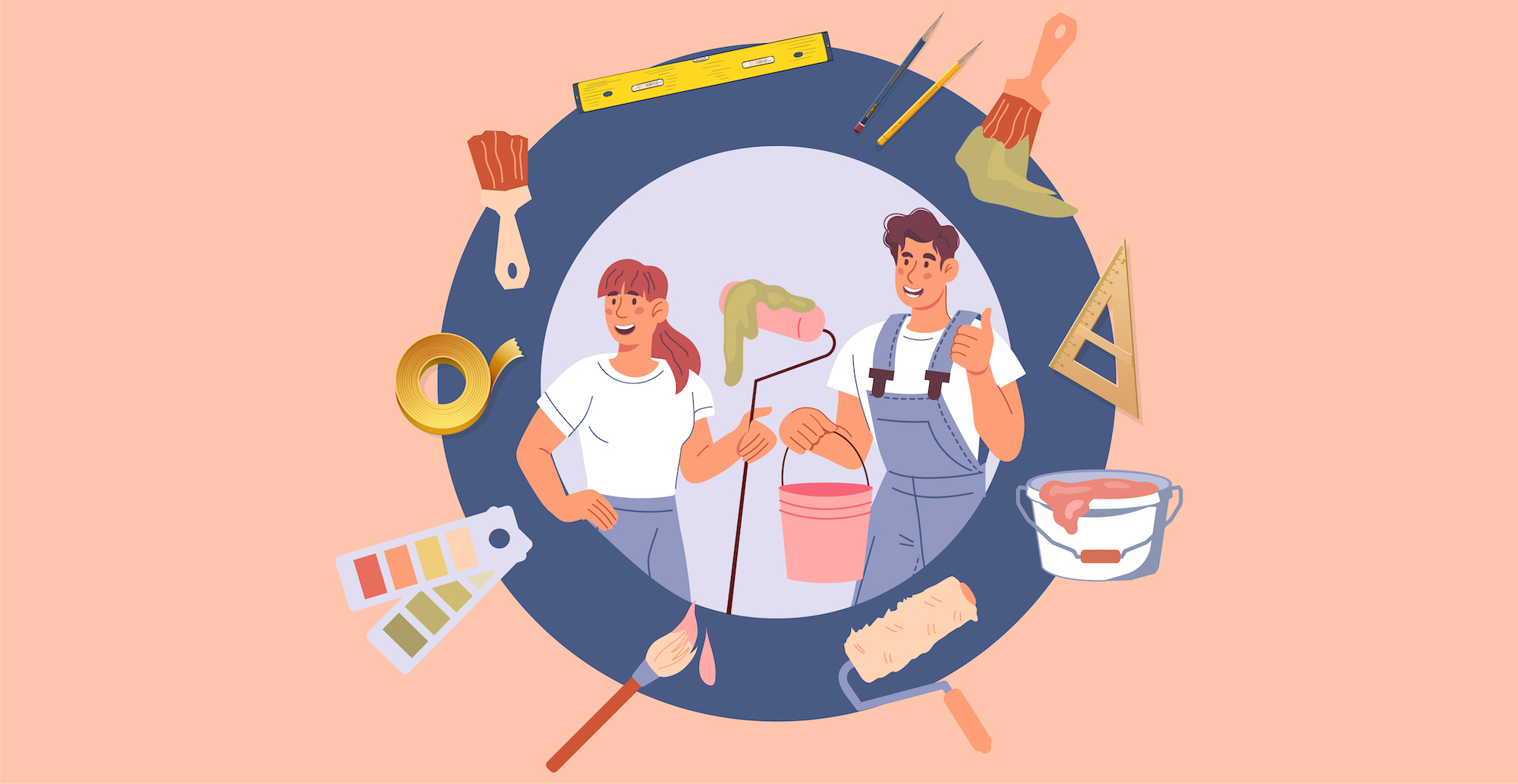
Following supplies are required to do a neutral two tone wall:
- Decorator’s masking tape
- Paint roller and tray
- Pencil
- Set-square
- Straight edge with spirit level
- Two shades of neutral tones
- 5 cm paintbrush
The Step-By-Step Process Of How To Paint Two Tone Wall!
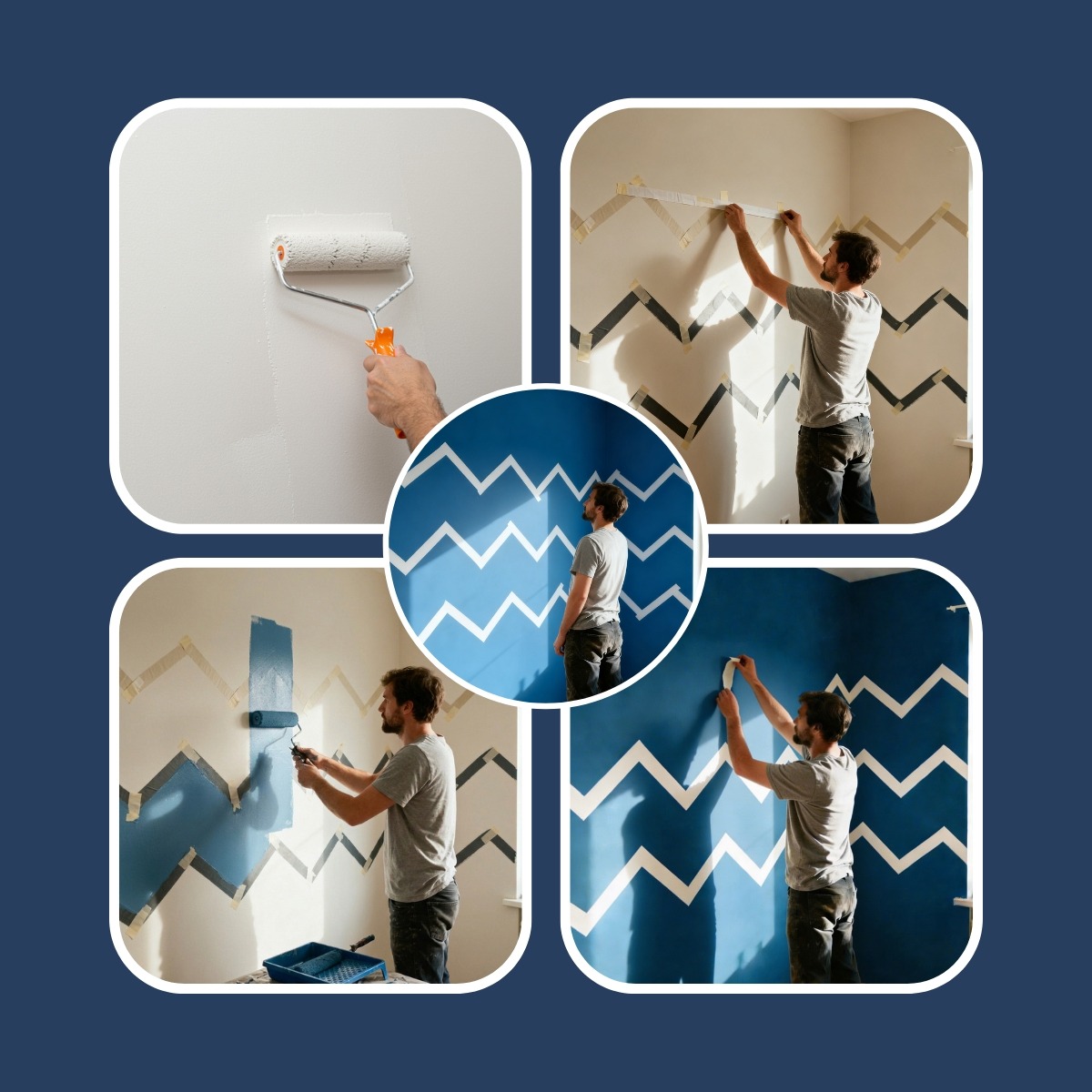
Taping the zigzag or other irregular patterns for two-tone painting techniques on the wall is the most time-consuming part of this project, but the result makes it all worthwhile. Let’s check out how to do two tone paint on wall:
1. Decide on the height where the straight, zigzag, other pattern or colour will meet. Then paint the top half of the wall in the lighter shade to roughly 2.5 cm below the lower point of the pattern. Leave this overnight to dry – this is important painting tips for two-tone walls in order to prevent the masking tape from lifting the paint as it is removed.
2. Measure the height to the top point of the pattern and make a mark. Do this along the wall, and draw a soft pencil line to join the marks. Check it with the spirit level.
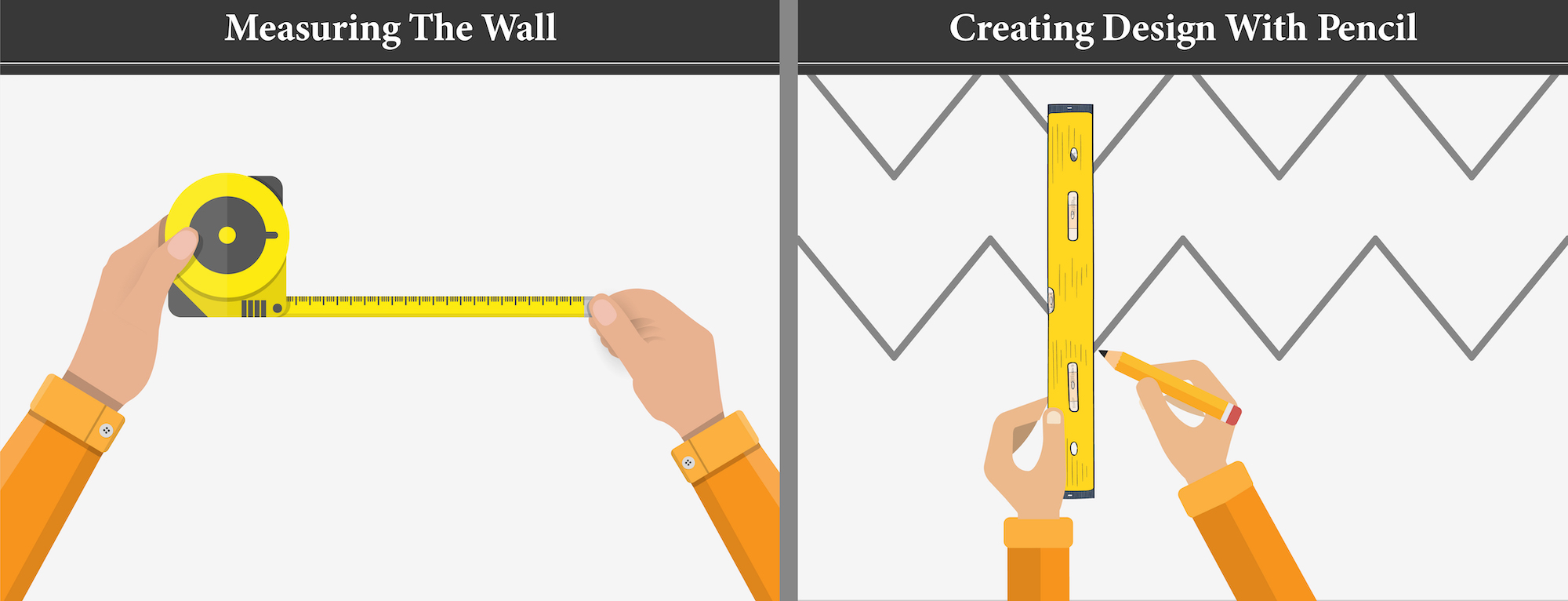
3. Place a strip of masking two tone tape a wall in the desired shape and size of the pattern on the wall. Here is the painting trick for two tone wall in Zigzag pattern. Put a tape at a forty five degree angle from the line to the wall edge. Now place another one at 90 degree to the first. Each following piece is placed at 90 degree to the previous one and trimmed to give a neat point.
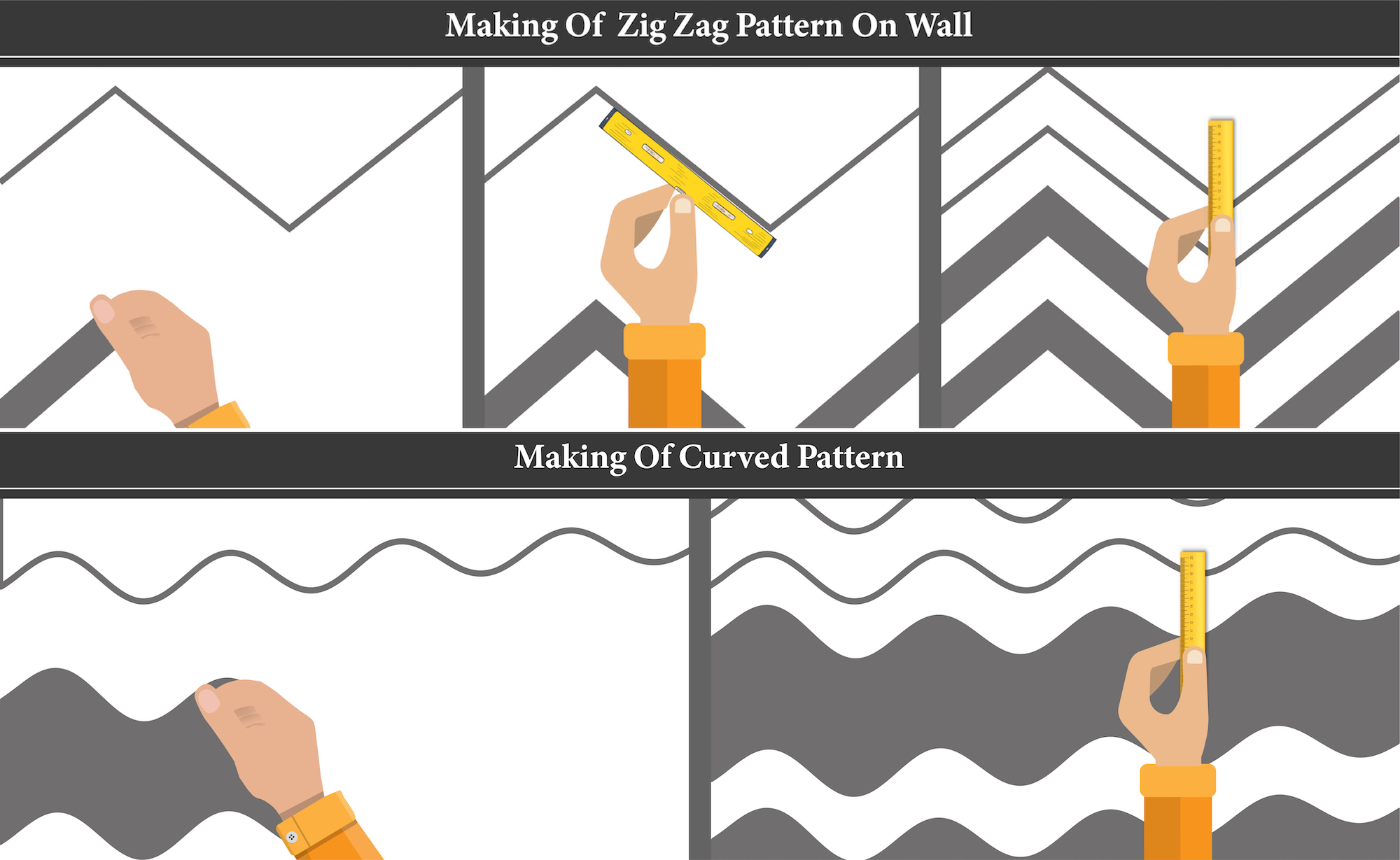
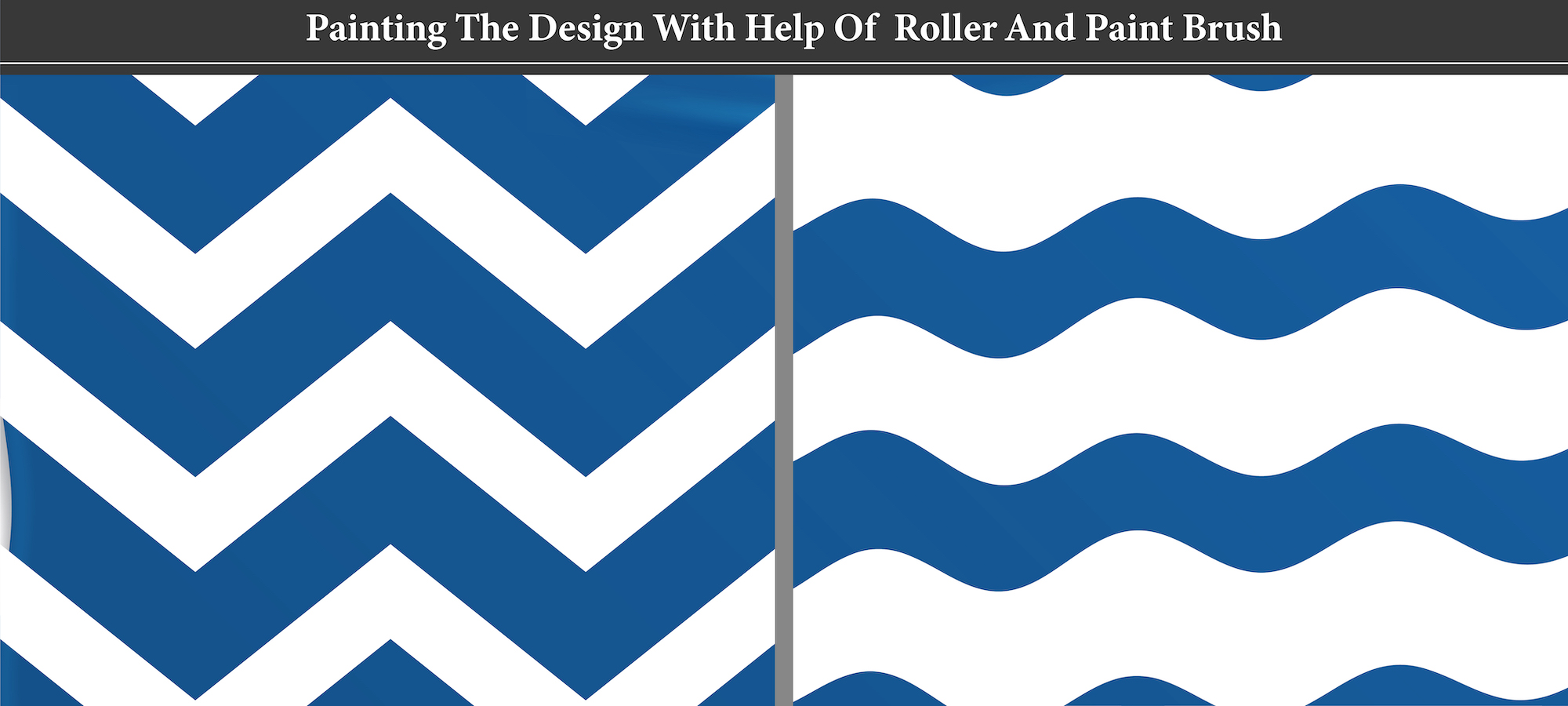
4. Editor ‘Fiona B’[386] suggested an interesting procedure in ‘The House Book’ to paint a two-tone wall. Paint the lower section of the wall using a small roller or brush to paint over the edge of the masking tape. Once the paint is almost dry, lift the masking tape carefully; breaking off and disposing of manageable sections as you go along. This way, you are less likely to become entangled in a web of painted tape! Use the paintbrush to touch up any pencil guidelines that remain on the lighter shade to create a two-tone wall painting.
Colour Selection Tips for Impressive Neutral Two-Tone Walls
The secret to creating a two-tone wall that makes a lasting impression is in the choice of colours. Your choice of two shades can make or ruin the entire look. So, here are a few tips to get that choice right:
- Choose colours from the same family for harmony.
- If openness is what you want, use lighter shades on top and darker shades on the lower half for grounding the space.
- Go for matte finishes for bedrooms and living rooms. Satin finishes work well in hallways and kitchens.
Test colours on a sample board before final application.
Bask in Glory
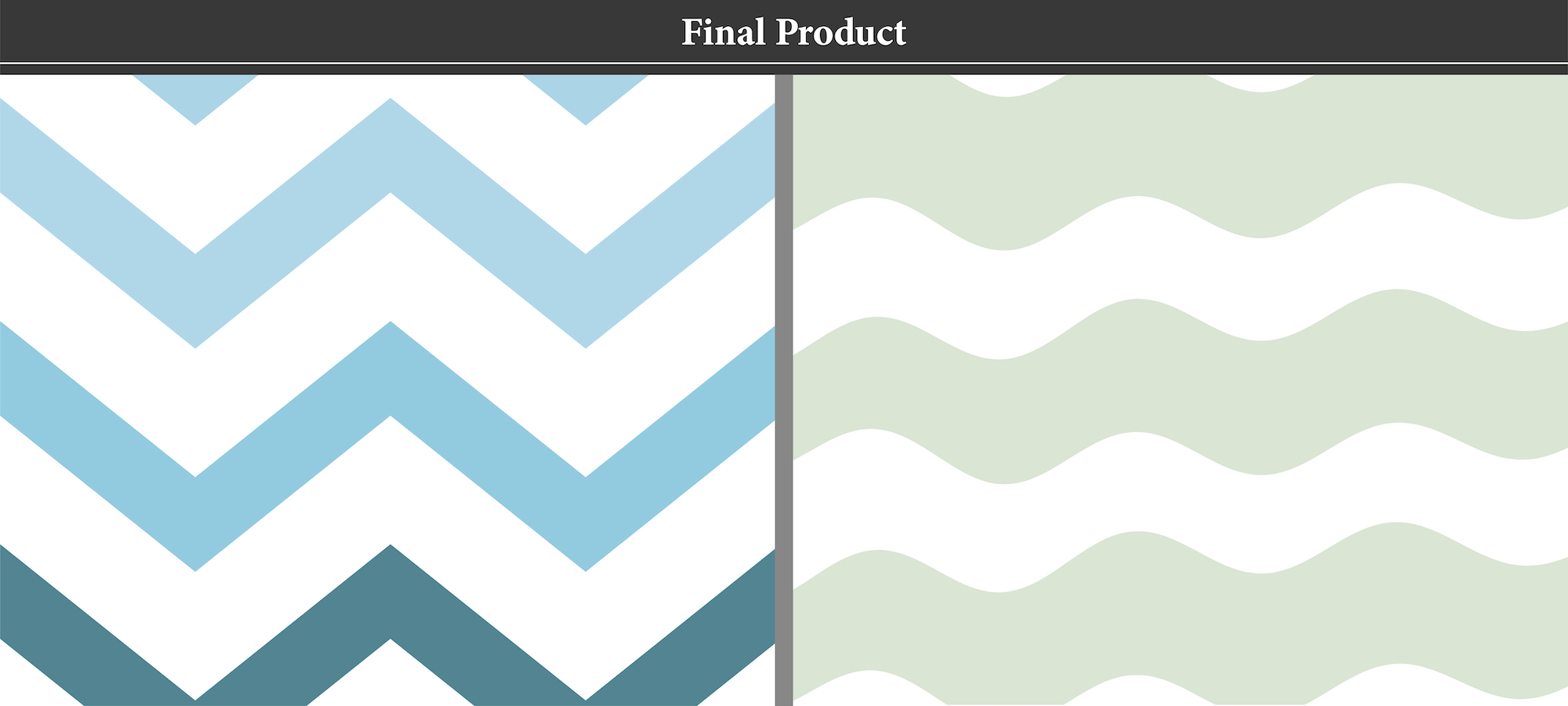
Now that you know how to paint a two-tone wall, transforming your room with neutral shades becomes simple and enjoyable. It is amazing how such a simple technique can create something stylish. Try this out and tell us your experience.
For more colourful makeover, check out:
House Makeover Ideas to Make Your House Colourful
FAQs on Two-Tone Neutral Wall Painting Process
01. What Is Two-Tone Wall Painting?
Two-tone wall painting uses two different shades or colours on the same wall, divided by a line or pattern.
02. Which Colours Are Best For Two-Tone Walls In Neutrals?
Popular neutral combinations include beige–khaki, grey–white, peach–cream, and pastel tones.
03. Where Should The Dividing Line Be Placed On A Two-Tone Wall?
The line placement depends on room height and shape to enhance visual proportions.
04. Is Two-Tone Wall Painting Suitable For Small Rooms?
Yes, it helps reduce a boxy feel and makes small rooms appear more balanced.
05. Can Two-Tone Walls Be Painted As A DIY Project?
Absolutely, with masking tape, basic tools, and careful planning, beginners can achieve neat results.
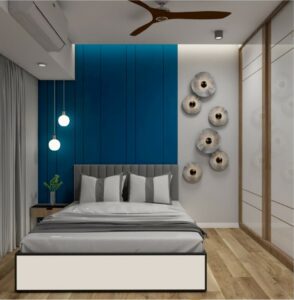
Courtesy - Image 1(AI-generated concept visual)
Author & Expert Review
Written By: Huta Raval | Guest Author
| An English Literature and Journalism Topper, Huta Raval has graduated from the L D Arts College, Ahmedabad. Post serving for 23 years in the NBFC and Public Library Sectors her desire for ‘writing the unwritten’ brought her to the creative field of content writing. Her clientele comprises of NGOs, Blogging Platforms, Newspapers, Academic Institutions, et al. |
Verified By Expert:  Ravin Desai – Co Founder – Gharpedia | Co Founder – 1 MNT | Director – SDCPL

This article has been reviewed for technical accuracy by Ravin Desai, Co-Founder of Gharpedia and Director at Sthapati Designers & Consultants Pvt. Ltd. With a B.Tech. in Civil Engineering from VNIT Nagpur and an M.S. in Civil Engineering from Clemson University, USA, and over a decade of international and Indian experience in the construction and design consultancy sector, he ensures all technical content aligns with industry standards and best practices.
Find him on: LinkedIn