






Table of Contents
Quick Summary
- Curtain Embellishments on curtains play a major role in defining a room’s mood, style, and personality.
- Curtain embellishments are decorative additions that enhance plain curtains without replacing them.
- Common embellishments include tassels, fringes, braids, cords, buttons, trims, and borders.
- They add texture, contrast, and visual interest to curtains, drapes, and sheers.
- Embellishments can be added to edges, bottoms, or curtain headings.
- Tassels and button tufts create a playful yet elegant look.
- Contrasting borders and piping help highlight curtain edges.
- Fringes add movement and a classic touch.
- Pelmet borders and mini-drapes enhance curtain tops stylishly.
- DIY curtain embellishments are cost-effective and easy to apply, making old curtains look new.
Curtains and curtain embellishments are those elements in a room decor that you can experiment with and change according to your taste, mood, and personal style. They play a major role in defining the character and ambience of any space. However, purchasing uniquely designed curtains for your home can be expensive. But, with little creativity, time, and effort, you can achieve trendy interior looks using simple curtain embellishments.
These decorative accessories not only turn your ordinary sheer curtains into statement pieces, but they can also have a big impact on your home’s interior designs too. In this article, we explore how curtain embellishments can help you enhance your curtains, embellishing curtains, and elevate your home décor effortlessly.

What are Curtain Embellishments?

Courtesy - ltkcdn
Embellishments are decorative objects used to add interest to curtains, shades, and drapes (not blinds!). They provide contrasting colours and textures as they are applied around the edges of the curtains and help define their shape.

Fringes, braids, tassels, buttons, trims and tufts are popular examples. These curtain additions extend finishing touches that enhance even simple and plain curtains. One of the best parts is that you can attach most of these curtain embellishments by hand, making them ideal for DIY projects of embellishing curtains.
Some commonly used curtain embellishments that may go with all types of curtains include:
1. Tiebacks and Holdbacks:
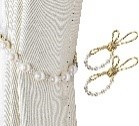
These hold curtains neatly to one side. They range from simple cords to decorative beaded ropes or metal hooks for curtain fabrics.
2. Pelmets and Frills:
Made of fabric or wood, these are placed above windows to hide curtain rods and step up architectural appeal.
3. Trims and Tufts:
Decorative fabric edges or hanging tassels add elegance, along with a playful accent.
4. Curtain Rings and Hooks:
These elements are called functional hardware for their beauty and utility. As design elements, rings and hooks are available in metal, wood, or plastic.
5. Fringes and Beaded Accessories:
These innovative curtain ideas are complimented by curtain accessories to add texture or shimmer, making them perfect for luxurious or eclectic interiors.
There are two ways to embellish your curtains. They are:
- Adding elements to the edges or the bottom
- Adding embellishments to the top or heading
Adding Curtain Embellishments to the Edges or Bottom

Courtesy - walmartimages
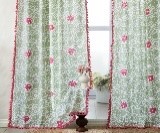
You can embellish your plain curtains with various elements along their edges or bottom to make them more interesting.
Here are a few amazing curtain embellishment ideas:
01. Define Curtain Edges and Headings with Cords or Ropes
Add texture to your curtains by hand-sewing cords or ropes along the leading edge of your finished curtains. The cord/rope can be of silk, cotton, or a combination of both. They can also be sewn across the heading of your finished curtains.
02. Give Your Curtains Character with Tassels and Button Tufts

Courtesy - pinimg
Have you ever planned, how to renovate old curtains? There are many options. For example, you may add a row of button tufts or tassels along the bottom edge. Sew them a few inches above the bottom edge for them to hang neatly. Wool, cotton, or raffia work well as material. These embellishments suit sheer, blackout, and regular curtains alike. Use contrasting colours, such as white curtains with navy blue tassels or maroon curtains with gold tassels, to create visual interest as fringe for curtains.
03. Add Contrasting Curtain Borders or Piping

Courtesy - pinimg
Add a border or piping to the edges of your curtains or drapes. The colour of your embellishments should match with the curtain or elements in it or a nearby decorative item. If your curtain is a neutral color, you can make things fun by adding a border with a contrasting colour. You can also eliven up a plain drape by adding an embroidered or patterned border.
04. Give Your Drapes an Oomph with Fringes

Courtesy - pinimg
How to make curtains look elegant? If your curtains look flat, dull, and undefined, fringes can surely bring in the much-needed upgrade. Metallic fringes create a glamourous shimmer while pastel or muted shades offer a softer, more subtle effect. Try this out on your plain curtains and let the fringes do all the talking.
Adding Curtain Embellishments to the Top or Headings

Courtesy - futurecdn
Small modifications to the curtain top can drastically change the overall appearance. Here’s how you add embellishments on the top or headings of your blackout curtains:
01. Pelmet Border

Courtesy - tonystextiles

Make your drapes more interesting by sewing a border across the front of the heading so they look like pelmets. If you are using a fabric different from your curtains, make sure there is a colour link in the two pieces. By adding pelmet border, you can know how to renovate old curtains.
02. Mini-Drapes

Courtesy - sdlcdn
Mini-drapes hide the curtain heading and add decorative charm. like a mini-drape. Hang a patterned or plain fabric from a rod above your curtains to achieve this look. If you are wondering how to embellish plain curtains, a patterned mini-drape can do all the magic, while solid contrasting or muted colours create a subtle yet elegant effect.
Conclusion
Your curtains are your blank canvas. Use any of these DIY curtain embellishments to transform ordinary window treatments into elegant and eye-catching design features. Whether you choose tassels or borders, fringes or mini-drapes, these small additions can make a big impact on your home interiors.
We hope this guide on curtain embellishments and decoration ideas inspires you to experiment and refresh your home décor in a fun and budget-friendly way.
If you are planning to buy new curtains, you may find these blogs useful:
Choose the Right Curtains Materials for your Home!
Decorate your House with Various Types of Curtains and Drapes!
FAQs on Curtain Embellishments
1. What are Curtain Embellishments?
Curtain embellishments are decorative accessories like tassels, fringes, and trims used to enhance the look of curtains.
2. How Can I Embellish Plain Curtains?
You can add borders, tassels, fringes, cords, or decorative pelmets to upgrade plain curtains.
3. Are DIY Curtain Embellishments Easy to Install?
Yes, most embellishments can be hand-sewn and are suitable for beginners.
4. Which Curtains Work Best with Embellishments?
Plain, sheer, blackout, and neutral-coloured curtains work best.
5. Do Curtain Embellishments Suit Modern Interiors?
Yes, when used subtly, they add elegance and character to modern spaces.
Author & Expert Review
Written By: Andrea Noronha | Guest Author
| Andrea Noronha – Andrea Noronha is a content writer and editor with over 4 years of experience. Although she comes from a finance background, Andrea is passionate about blogging about interior design. Her other interests include travelling, baking, and digital marketing. |
Verified By Expert:  Farhan Shaikh – Senior Manager – Architect, SDCPL | Associate Member – IIA
 Farhan Shaikh – Senior Manager – Architect, SDCPL | Associate Member – IIA
This article has been reviewed for architectural and interior design accuracy by Farhan Shaikh, Senior Manager – Architect at Sthapati Designers & Consultants Pvt. Ltd. As the lead for all architectural and interior projects at SDCPL and an Associate Member of the Indian Institute of Architects (IIA), he brings hands-on experience in architectural planning, interior design, project coordination, and sustainable strategies. His review ensures the content reflects practical design considerations, industry best practices, and real-world applicability across both architecture and interior spaces.
Find him on : Linkedin