






Table of Contents
Quick Summary
- BV Doshi was a legendary Indian architect who shaped modern architecture and urban planning for over seven decades. He is called the Father of Indian Architecture.
- He became the first Indian to receive the Pritzker Architecture Prize in 2018, placing India firmly on the global architectural map.
- Doshi skilfully blended modernist principles with Indian culture, climate, and traditions.
- He worked closely with Le Corbusier and Louis Kahn, influencing India’s post-independence architectural identity.
- His notable works include Aranya Low-Cost Housing, Sangath, IIM Bangalore, CEPT University, and Amdavad Ni Gufa.
- Doshi was a pioneer of affordable housing and community-centric design.
- His architecture promoted sustainability, social equity, and human well-being.
- BV Doshi’s legacy continues to inspire architects worldwide.
Balkrishna Doshi or BV Doshi and BV Doshi works are landmark in the Indian architectural history. Can you ever tell the Indian architectural history of the post-independence era without mentioning the name of Balkrishna Doshi? It is almost impossible. BV Doshi, as he is known to all, is not just an architect. He created buildings that listened to the climate and responded to people.
Balkrishna Vithaldas Doshi stands as one of the most influential figures in Indian architecture. A pioneer of people-centric and climate-responsive design, he transformed modern architecture in India. He built structures that were modern, yet unmistakably Indian.
First Indian to receive the Pritzker Prize in 2018, Doshi influenced the language of architecture and urban planning over the past seven decades. He made a powerful impression in India with residential developments, schools, banks, cinemas, and low-income housing projects. His work and philosophy reflected Indian culture. Here’s looking into the life and times of the man who is called the Lighthouse of Indian architecture.
Why BV Joshi is Called the “Lighthouse of Indian Architecture”?
After Independence, Indian architecture stood at a crossroads. It was torn between colonial styles, indigenous designs and imported western modernism. There was a need to embrace modern design that could serve the Indian requirements. At this juncture, Doshi provided direction to Indian architecture when it was searching for its identity after Independence. Trained under Le Corbusier and influenced by Louis Kahn, Doshi did not merely import Western modernism, but he reshaped and altered it to suit India’s climate, culture and social realities. His work in affordable housing, educational institutions, and urban design offered a humane alternative to monumental architecture.
His architectural studio, Sangath, in Ahmedabad, represents the culmination of ideas developed throughout his career.
What’s more, his studio guided generations of architects towards contextual, sustainable and people-centric design. Like a lighthouse, his philosophy stands, lighting up the path for Indian architecture.
Doshi’s Early Life and Upbringing

Courtesy - Stirworld
Doshi early life and upbringing was mostly uneventful. Britannica’s Associate Editor Zelazko A. sheds light on Doshi’s humble early life and upbringing. On August 26, 1927, Doshi was born in Pune, India, to a large Hindu family with two generations working in the furniture business.
In 1947, he began studying architecture at the Sir J.J College of Architecture. In 1950, he flew to London and met Le Corbusier. Le Corbusier and BV Doshi worked for the following four years in Le-Corbisier’s Paris studio. Doshi then returned to India to supervise the construction of several of Le Corbusier’s designs for Chandigarh and Ahmedabad.
Doshi’s Later Life and Works

Courtesy - Archdaily
In the segment of BV Doshi’s life and work realm he worked in Ahmedabad on the Mill Owners’ Association Building and the Villa Sarabhai (1955). Doshi also worked closely with Louis I Kahn for nearly a decade. He finally settled in Ahmedabad, where he designed his house in 1963, named Kamala House, after BV Doshi wife Kamala. He also established his studio, Sangath, where he executed some of his most notable projects. Doshi founded his practice, Vastushilpa, in 1956, which he renamed Vastushilpa Consultants. The firm worked on over 100 projects in India, including one with Louis Kahn at the Indian Institute of Management, Ahmedabad.
Achievements of BV Doshi
Courtesy - Counterpoint
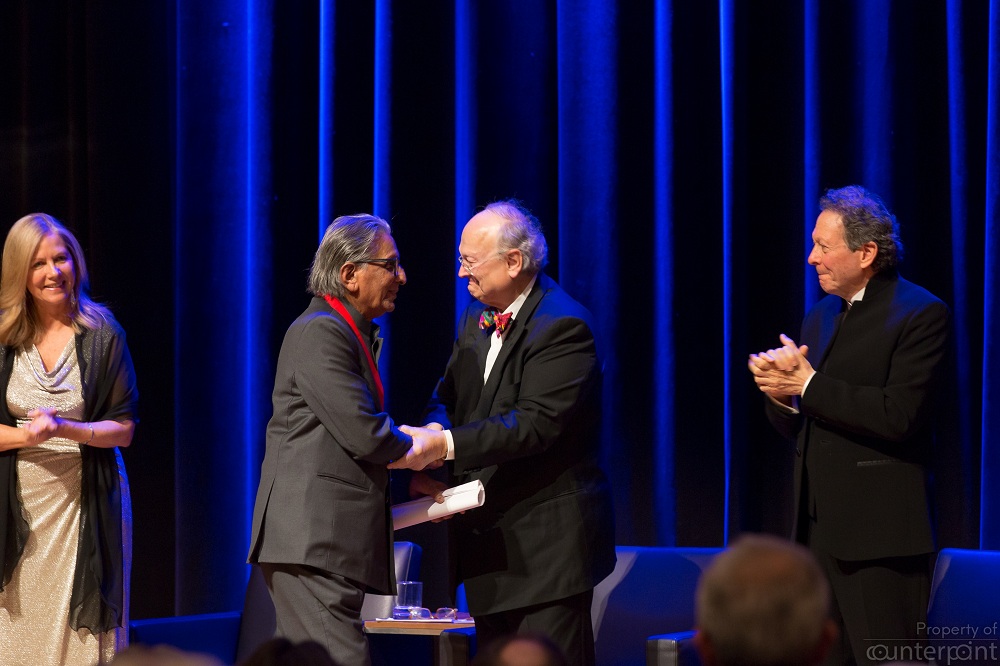
BV Doshi’s significant contribution to architecture, building skills, and urban design practice established him as a prominent figure in Indian architecture. He was honoured with various esteemed national and international awards. He created history as the first Indian recipient of the Pritzker Architecture Prize. He created history as the first recipient of the Pritzker Architecture Prize.
The chronological timeline of the achievements of Doshi is presented below:
1976 – Padma Shree National Award, Government of India (GOI)
1988 – Gold Medal, Academy of Architecture of France
1988 – Gold Medal, Indian Institute of Architects (IIA)
1993-1995 – Aga Khan Award for Architecture for Aranya (AGA) Community Housing
2000 – Prime Minister’s National Award for Excellence in Urban Planning and Design, India
and Padma Bhushan award from Govt. of India.
2005-2007 – Pritzker Prize Jury member.
2007 – Global Award for Lifetime Achievement for Sustainable Architecture, Institut Francais d’Architecture, Paris
2011 – Officer of the Order of Arts and Letters of France
2022 – Royal Gold medal from the Royal Institute of British Architects (RIBA)
2023 – He received Padma Vibhushan (posthumous) award.
Doshi was a Fellow of the Royal Institute of British Architects and the Indian Institute of Architects and an Honorary Fellow of the American Institute of Architects (AIA). He also served on selection committees for the Indira Gandhi National Centre for the Arts and the Aga Khan Award for Architecture.
BV Doshi’s Architectural Legacy
BV Doshi has executed several architectural projects; however, 10 iconic projects among them are highlighted here.
01. Aranya Low-Cost housing, Indore
Courtesy - architectural-review.com
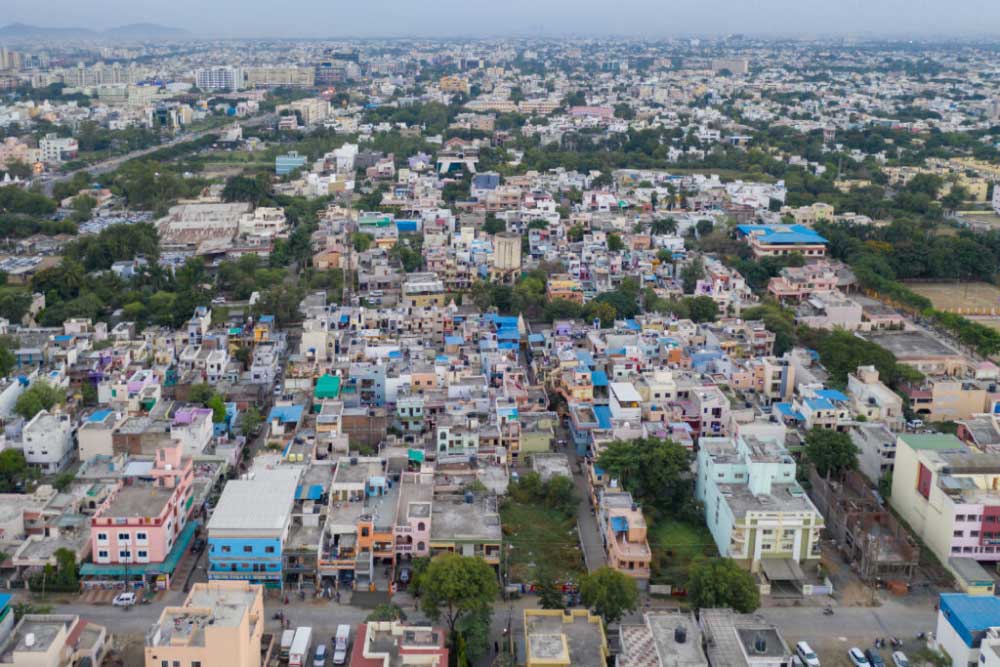
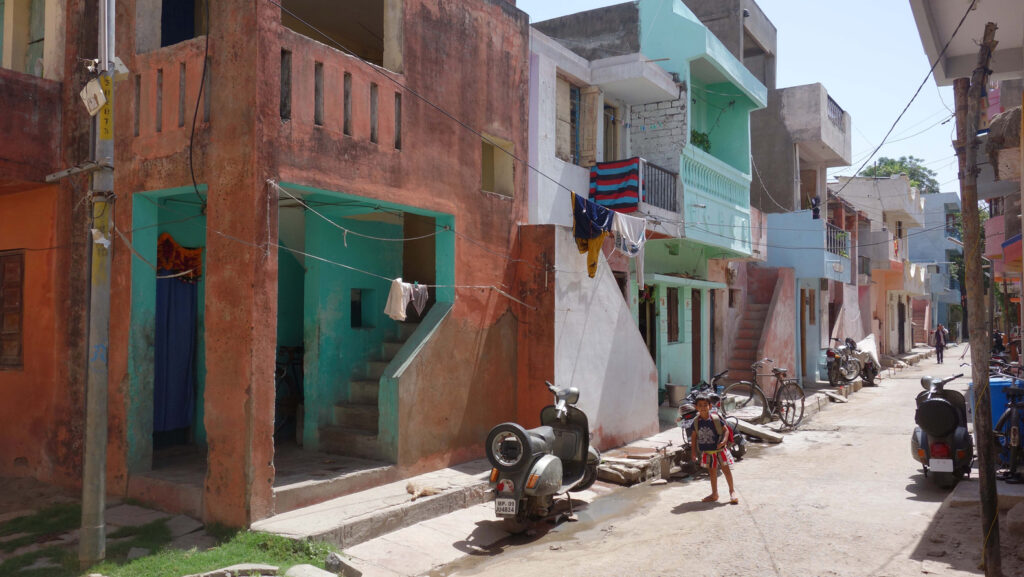
In an exclusive interview with Anchor Zeenat S. for Al Jazeera, BV Doshi expressed his views on the social consciousness that an architect must possess. Doshi’s ideas for Aranya low-cost housing, targeted at low-income groups, resulted in the construction of 80 model homes where inhabitants felt empowered to modify their dwellings.
This township was created to foster a feeling of community and to promote harmony between the architectural design and its residents. This was a comprehensive strategy for “a cohesive society” where a mix of various socio-economic classes could co-exist. Doshi explored the hierarchy of open spaces by including small courtyards shared by three to four households, larger green areas for each of the settlement’s six sectors, and a central playing area serviving the entire complex. If you want to understand what role architects and laymen play, do check out: sense of place: tale of designing experiences: is our role as an architect and human, different?
Courtesy - adsttc.com
02. Atira Housing, Ahmedabad
Courtesy - Hidden Architecture & Architexturez
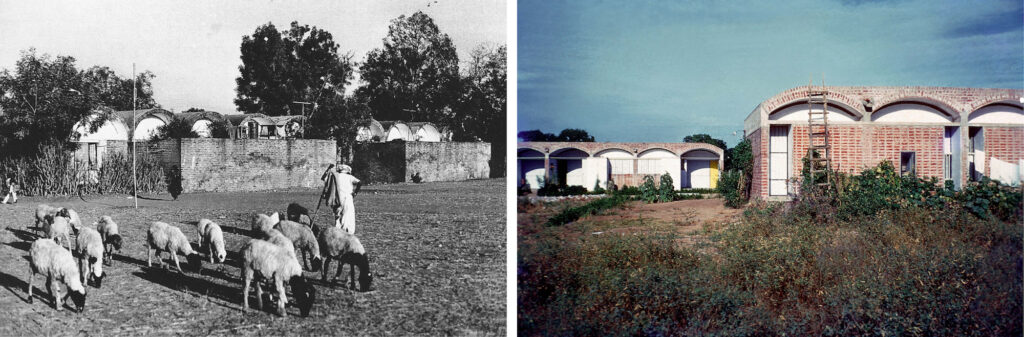
Atira housing exemplifies a novel typology in which bricks are used for load-bearing walls and a segmental vault as a roof. Hollow walls act as insulation compared to typical steel and concrete structures. Ahmedabad is known for its extreme heat; hence, the apartments are oriented from north to south to reduce the impact of the afternoon sun. Front and rear verandas were constructed for summer sleeping. Each residence designed by BV Doshi had its own garden. Vertical slots with pivoting doors ensured cross-ventilation.

Courtesy - Architexturez (b) , Architexturez(b)
03. Sangath, Ahmedabad

Courtesy - Architecture Magazine
Sangath located in Ahmedabad, served as BV Doshi’s office. Sangath BV Doshi is a powerful manifestation of his architectural philosophy. The Sangath Ahmedabad structure has an intimate scale, sectional ingenuity, and spatial complexities. The grassy amphitheatre, the water channels, and gardens in the foreground are framed by the vaults descending into the landscape. There is a vital integration of architecture and landscape. The entrance is visible as one walks past the reflecting pools that highlight the vaults in calm water. Light is explored in the spaces created between walls and vaults.

Courtesy - studiolaurianetwork.com
04. Tagore Memorial Hall, Ahmedabad
Courtesy - re-thinkingthefuture.com
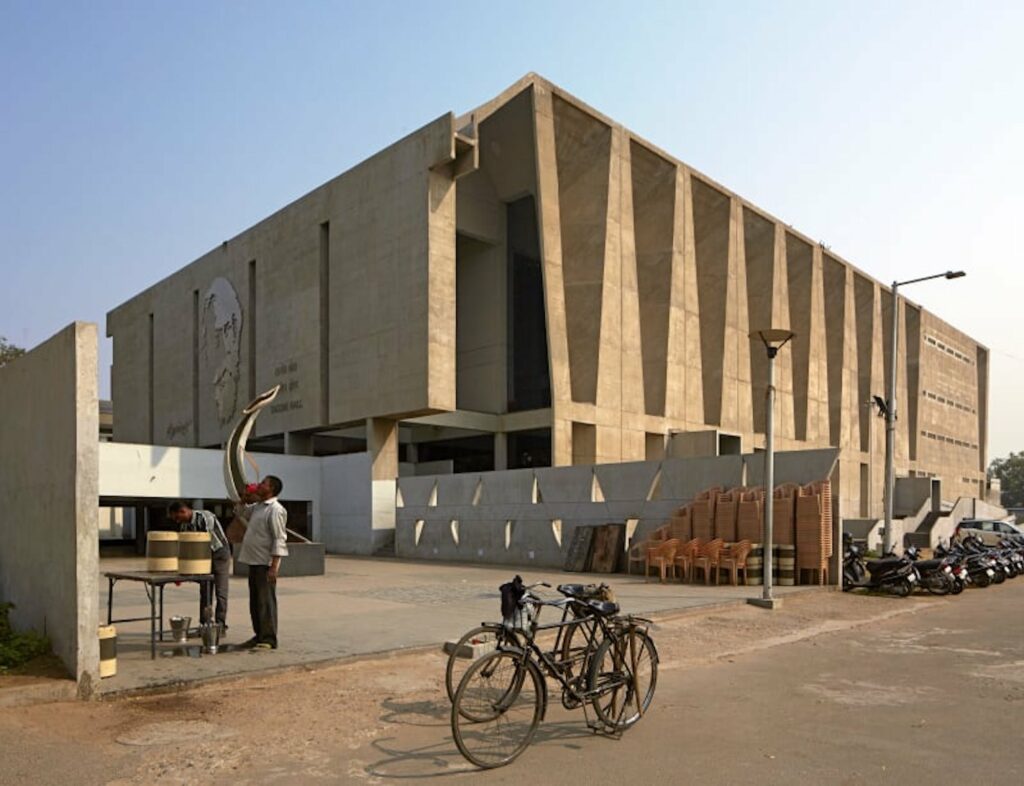
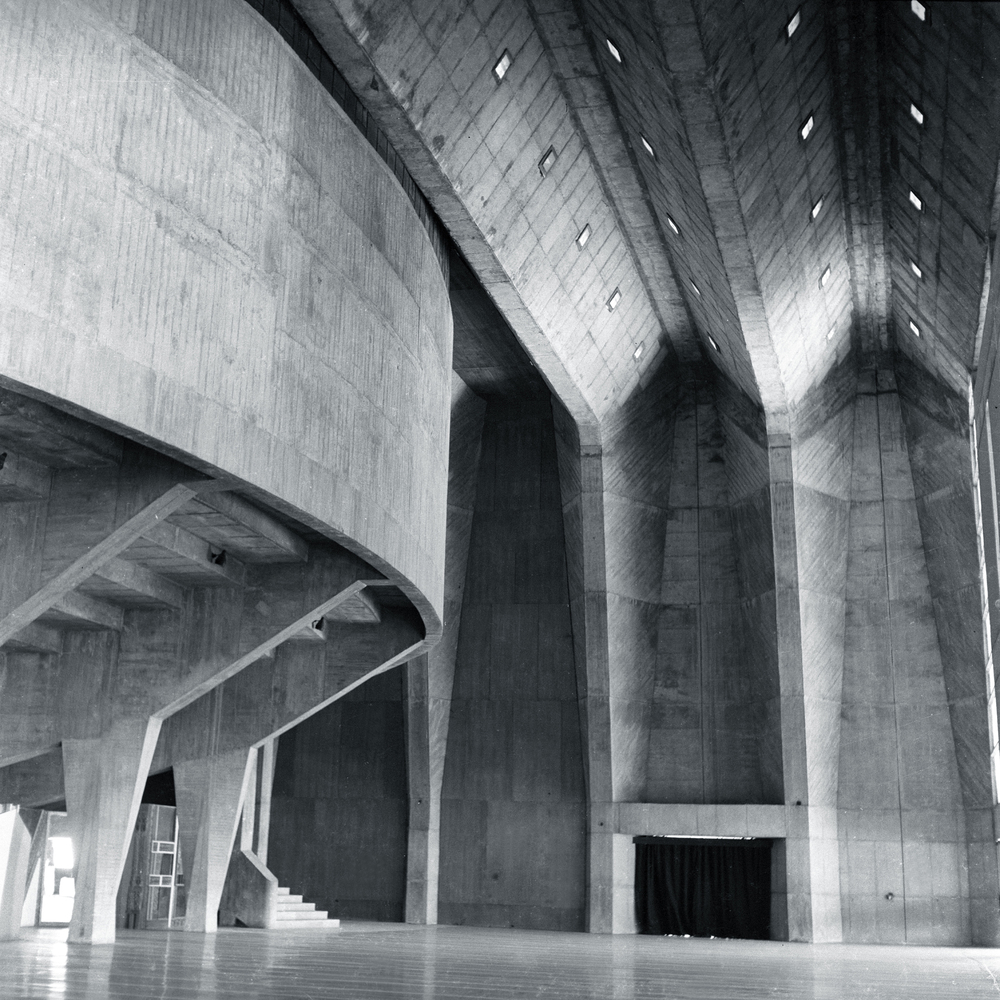
Tagore Memorial Hall represents Doshi’s brutalist inclinations. Rising from the banks of the Sabarmati River, the massive concrete structure pays homage to B.V Doshi’s love for abstract geometry and light patterns. The structure is distinguished by the exposed materials, monochromatic palette, strong angular geometric forms, massive scale, and bare structural elements.
Courtesy - Archdaily
05. Amdavad Ni Gufa, Ahmedabad
Courtesy - Iwan Baan, Archdaily
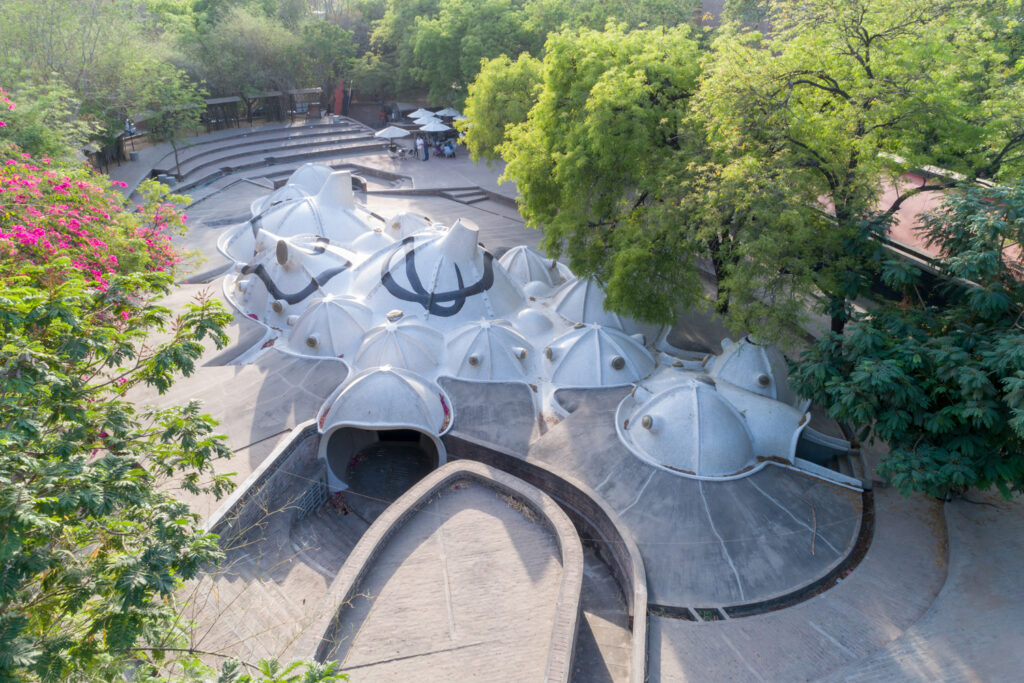
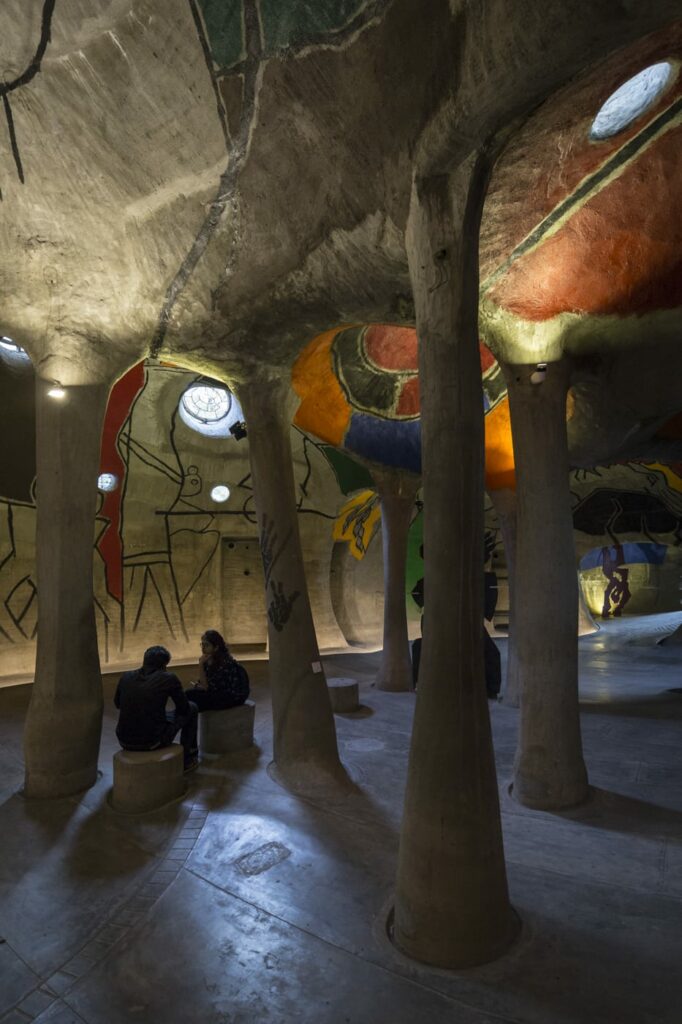
Amdavad Ni Gufa in Ahmedabad demonstrates that Doshi’s work can be both utilitarian and whimsical. Designed as a subterranean gallery to exhibit thw orks of artist MF Husain, the project was inspired by a conversation between the two artists nearly thirty years earlier.
The webpage of Sangath describes this building as an exploration of form and function, where, fluid spaces interact with constantly shifting light.
Courtesy - tripadvisor.in
06. CEPT University, Ahmedabad
Courtesy - images.adsttc.com
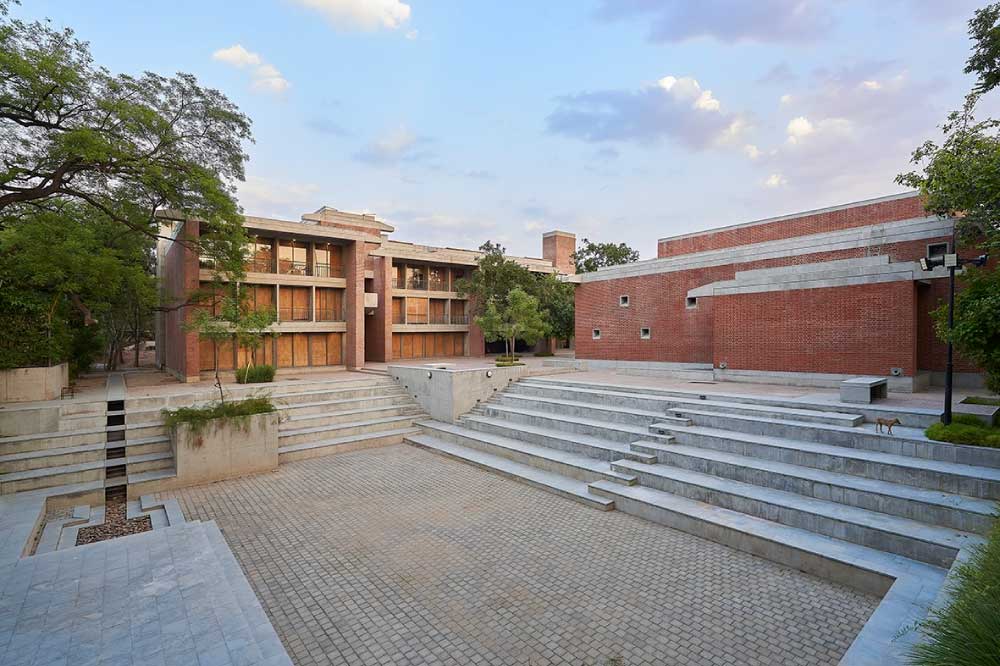
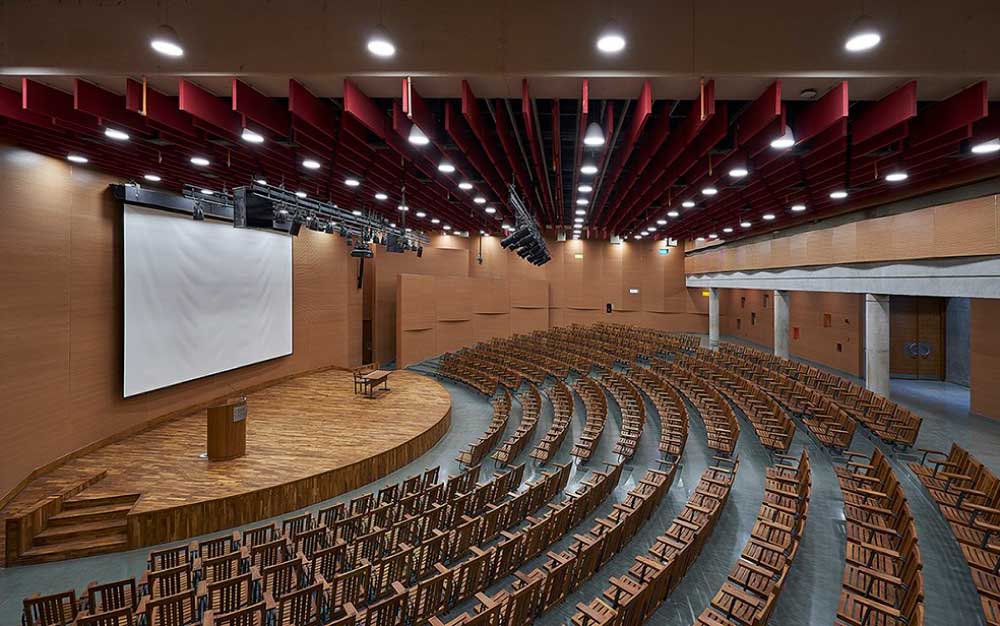
The Center for Environmental Planning and Technology (CEPT) is an institutional landmark designed by BV Doshi. The structure is influenced by both Le Corbusier and Louis I. Kahn. He built a structure of parallel brick walls and deep concrete columns to minimise sunlight while allowing natural circulation. The campus was designed to suit Ahmedabad’s hot climate and to create shaded spaces for interaction, encouraging both formal and informal learning.
Courtesy - www.archdaily.com
07. Sawai Gandharva Hall, Pune
Courtesy - ak-d.tripcdn.com
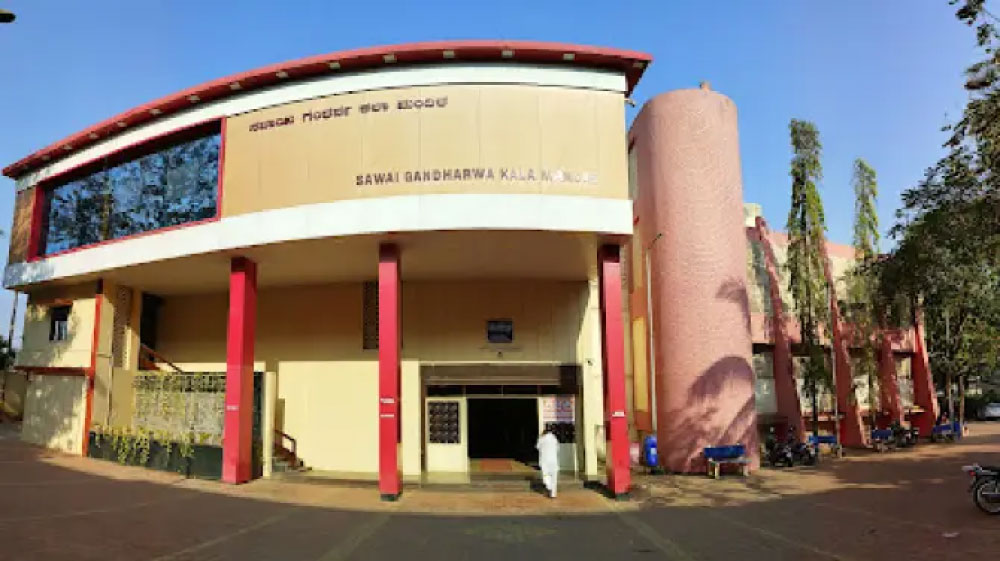
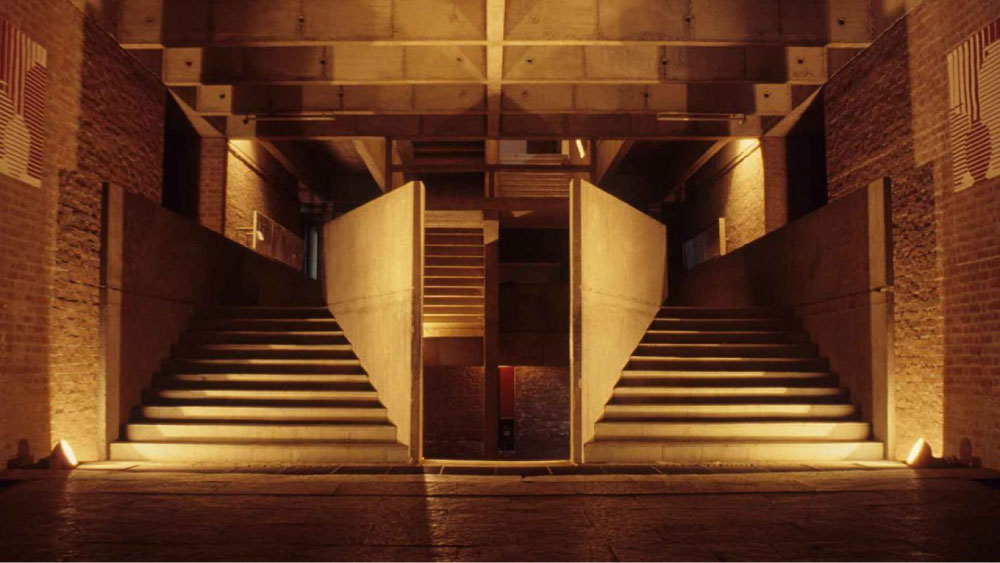
Sawai Gandharva Hall is an auditorium set in the heart of Pune, in the Deccan region of India. A 300-seat auditorium occupies the lower floor, while the upper two floors house classrooms. The structure narrates a journey through interconnected rooms and unconventional spatial arrangements.
Courtesy - www.architecturaldigest.in
08. Life Insurance Corporation Housing Colony, Ahmedabad

Courtesy - www.architectmagazine.com
Life Insurance Corporation’s ‘LIC Housing colony’, Ahmedabad, is a multi-generational housing scheme that can accommodate the changing needs of the residents. Locally referred to as “Bima Nagar,” the LIC Colony Ahmedabad is a novel typology that enables its residents to participate in the homebuilding process. BV Doshi flipped the traditional layout by placing larger units on the lower floors and smaller units on the top, allowing the upper unit to enjoy a terrace that may also be turned into an additional living area. This encouraged social diversity and interaction.

Courtesy - re-thinkingthefuture.com
09. Indian Institute of Management, Bangalore

Courtesy - Thinkmatter
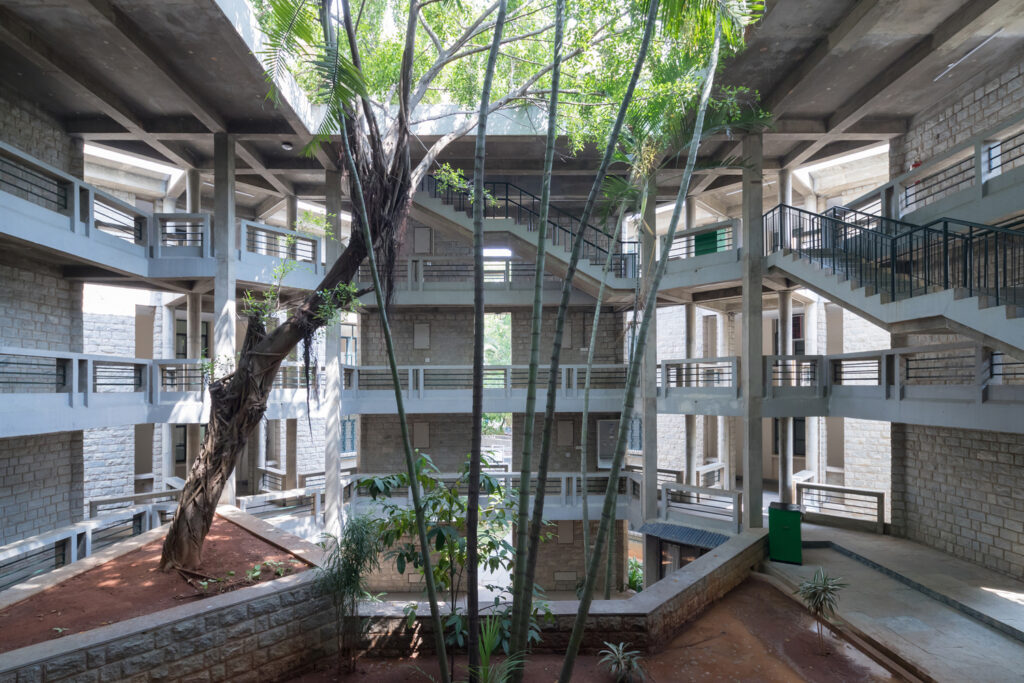
Indian Institute of Management Bangalore (IIM-B) is one of the premier business schools in India. The IIM Bangalore BV Doshi campus was envisioned by him as a blend of traditional Indian architecture and local climate sensitivity. The 54,000-square-meter campus spans 100 acres near Bangalore’s western hills. Inspired by Fatehpur Sikri, IIM Bangalore architect BV Doshi connected courtyards and corridors to encourage intellectual engagement outside classrooms.
Courtesy - Iwan Baan
10. ECIL, Hyderabad

Courtesy - 0.wp.com/thearchspace.com
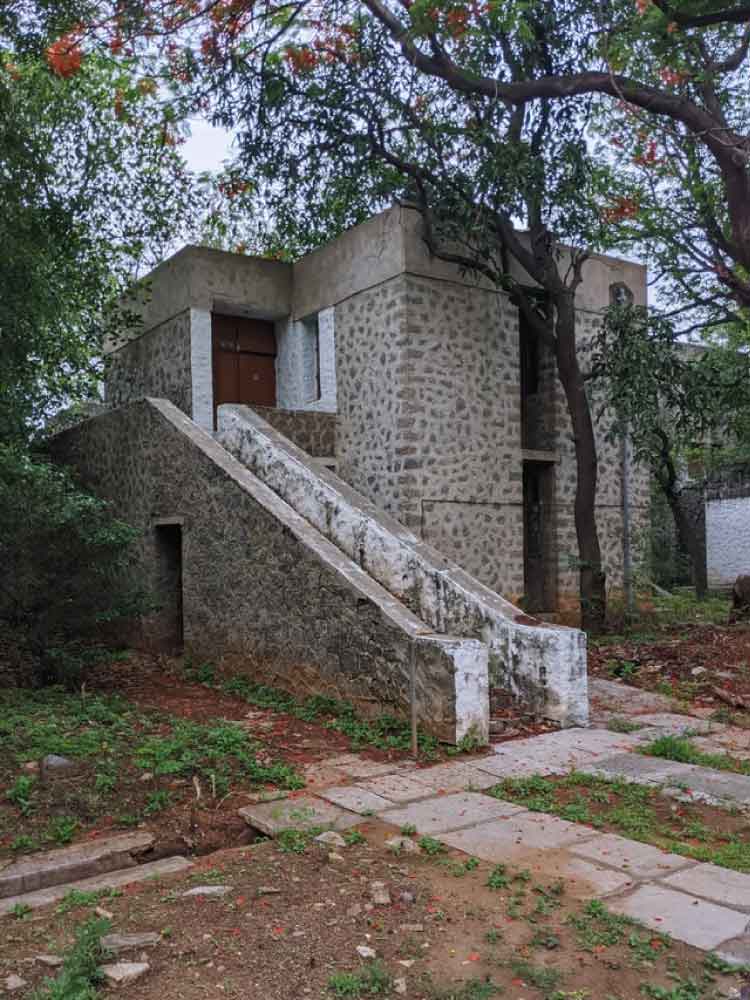
The ECIL Hyderabad housing township was built as part of a planned expansion of the city’s electronics sector. The community is roughly 15 kilometres from the centre of Hyderabad. Doshi meticulously studied sun angles and wind directions to optimise ventilation and climate comfort.
Courtesy - reddit.com
5 lesser-known facts about BV Doshi
Courtesy - India Today
- BV Doshi used a context-driven and localised modernist approach.
- He drafted a housing bill that was presented to the United Nations.
- Doshi created the Habitat Bill of Rights, which was submitted by the Iranian government to the United Nations Conference on Housing and Sustainable Development.
- He appeared in Mani Ratnam’s Tamil film ‘O Kadhal Kanmani’ and its Hindi remake, ‘Ok Jaanu.’
- Doshi is a well-known teacher. Buckminster Fuller inspired him to begin teaching.
- Doshi served on the Pritzker Prize jury from 2005 to 2009.
Doshi’s Ideas in Smart Cities
Doshi’s principles guide smart cities by blending technology with climate-responsive planning, walkability, mixed-use communities, and human-scale spaces. The amalgamation could enhance organically the quality of life of city-people, not just digital efficiency, but also through scientific ergonomics. Most importantly, his buildings remain relevant because users adapt and inhabit them. His architecture functions as a living framework evolving with culture, climate and human needs.
BV Doshi: The paramount figure of Indian Architecture

Courtesy - The Quint
BV Doshi was a household name in Indian architecture. A pioneer of affordable housing, his projects embodied democratic values through community participation and sustainable design. Doshi passed away on January 23, 2023, and was posthumously awarded the Padma Bhushan, the second-highest civilian award in India.
Why Doshi is an Inspiration for Today’s Architects?
Balkrishna Doshi remains an inspiration for today’s architects and designers through his deeply human-centric approach. The legacy of BV Doshi is that he proved that architecture can be modern yet rooted in culture, climate, and community.
Doshi’s work prioritised affordability, sustainability, and social impact over visual spectacle. His belief that buildings should evolve with people offers a powerful lesson for architects navigating rapid urbanisation and climate challenges.
His work reminds us: “Good design is not about spectacle alone; it is about a better life.”
Do check out the following links
An evolution in Architectural Styles in India through Last Few Centuries!
The Relation Between Building Designs and Culture!
FAQs on BV Doshi, Finest Public Architect of India
1. Who was BV Doshi?
BV Doshi was an internationally acclaimed Indian architect known for socially responsive and climate-sensitive architecture.
2. Why is BV Doshi Famous?
He is famous for winning the Pritzker Prize 2018 and pioneering affordable housing in India.
3. What are the Most Famous Works of BV Doshi?
Aranya Low-Cost Housing, Sangath, IIM Bangalore, CEPT University, and Amdavad Ni Gufa are his iconic projects.
4. What Architectural Style did BV Doshi Follow?
He blended modernism with vernacular Indian architecture and sustainable design.
5. What is BV Doshi’s Architectural Legacy?
His legacy lies in people-centric design, sustainable urbanism, and inclusive housing solutions.
References
Zelazko, A. (2022) Balkrishna Doshi – Encyclopedia Britannica [Online] Available from: https://www.britannica.com/biography/Balkrishna-Doshi
Pritzkerprize Author (n.d.) Balkrishna Doshi [Online] Available from: https://www.pritzkerprize.com/laureates/balkrishna-doshi
Zeenat, S. (2018) Balkrishna Doshi: ‘Architecture is a backdrop to life’ [Online] Available from: https://www.aljazeera.com/features/2018/3/9/balkrishna-doshi-architecture-is-a-backdrop-to-life#:~:text=Doshi%20was%20born%20in%20Pune,Corbusier%20before%20returning%20to%20India
Sangath Editors (n.d.) Amdavad Ni Gufa [Online] Available from: https://www.sangath.org/projects/amdavad-ni-gufa-ahmedabad/
Author & Expert Review
Written By: Saili Sawantt | Guest Author
| She is an Architect and Interior Designer by profession. Writing is what she treats as her passion. She has worked as an Architectural Writer, Editor, and Journalist for various design as well as digital portals, both national and international. Formerly she has also worked with Godrej Properties Limited (GPL) Design Studio, Mumbai, due to her keen interested in learning about Sustainability and Green buildings. Apart from this, she runs her blog ‘The Reader’s Express’ and is a practicing Architect & Interior Designer. |
Verified By Expert:  Ravin Desai – Co Founder – Gharpedia | Co Founder – 1 MNT | Director – SDCPL

This article has been reviewed for technical accuracy by Ravin Desai, Co-Founder of Gharpedia and Director at Sthapati Designers & Consultants Pvt. Ltd. With a B.Tech. in Civil Engineering from VNIT Nagpur and an M.S. in Civil Engineering from Clemson University, USA, and over a decade of international and Indian experience in the construction and design consultancy sector, he ensures all technical content aligns with industry standards and best practices.
Find him on: LinkedIn